As a Tar Heel (I know that is not always a popular thing to admit), I can’t help but be excited about the season of college basketball. And as a nerd focused on ways we can more equitably invest in people, I’m also excited that it’s tax season – including the ways that income-boosting tax credits provide an opportunity for more Minnesotan residents to cover everyday costs.
On the Vibrant & Equitable Communities team, we’re mindful that wages and other earnings aren’t keeping up with the costs of living—limiting opportunities for Minnesotans to take care of their families and communities, navigate unpredictability in our economy (including the latest immigration enforcement), save for the future, and share in our state’s storied abundance.
To address these gaps, organizations across Minnesota are testing and implementing new cash transfer and asset-building models to understand how they can help improve households’ income outside of jobs and wages and create stable income; build savings to buy an asset (like a home or business); and ensure that all residents, including people who are making the lowest wages, are sharing in the state’s prosperity. These income- and asset-boosting innovations – such as guaranteed income programs, early savings accounts, and early start-up capital (like baby bonds) – build on and complement existing models. Income boosting tax credits are one of those models – an important tool for stabilizing individuals’ and families’ income.
Income boosting tax credits
As Minnesotans, we look out for one another. We understand that our well‑being is connected. One of the ways we take care of each other is our state budget, both its investments (what is spent) and its revenues (what it takes in). Our state budget provides critical resources that advance quality of life for us all. These shared resources make it possible for all of us to live vibrant, dignified, and safe lives—from the roads we travel, to the schools our children attend, to the homes we live in, to the arts we experience, to the parks where we play, to the clean air and water we rely on every day.
Our state budget provides critical resources that advance quality of life for us all. These shared resources make it possible for all of us to live vibrant, dignified, and safe lives—from the roads we travel, to the schools our children attend, to the homes we live in, to the arts we experience, to the parks where we play, to the clean air and water we rely on every day. Katie Wehr, Senior Program Officer, Vibrant & Equitable Communities
One important way we collectively invest in people is through income-boosting state credits. When you file your taxes and if you qualify, these tax credits reduce the amount of state taxes you owe – and in some cases may increase your refund or provide you with a refund even if you don’t owe any taxes. By providing additional income to families, these credits help create financial stability for individuals and families across our state.
That support matters now more than ever given the affordability issues folks are feeling. With high living costs and the stress many individuals and families are feeling because of immigration enforcement, income-boosting tax credits can make a real difference in people’s lives. They help people cover everyday costs like rent, groceries, school supplies, child care, utilities, and transportation.
Read on to explore information and resources about several Minnesota tax credits available to families and individuals.
So how can you benefit from these tax credits?
State and federal income tax returns are due April 15. To claim Minnesota tax credits, you’ll need to file a state income tax return.
The good news? There have been some recent changes that better support Minnesota families and renters.
Support for families
Minnesota’s Child Tax Credit (CTC) و Working Family Credit are designed to support families with lower incomes.
In 2023, Minnesota created a nation-leading Child Tax Credit to strengthen economic stability for children across the state. The amount you can receive depends on your income and family size—and you may get a refund even if you don’t owe income taxes. Families who file using either a Social Security Number or an Individual Taxpayer Identification Number (ITIN) can qualify.
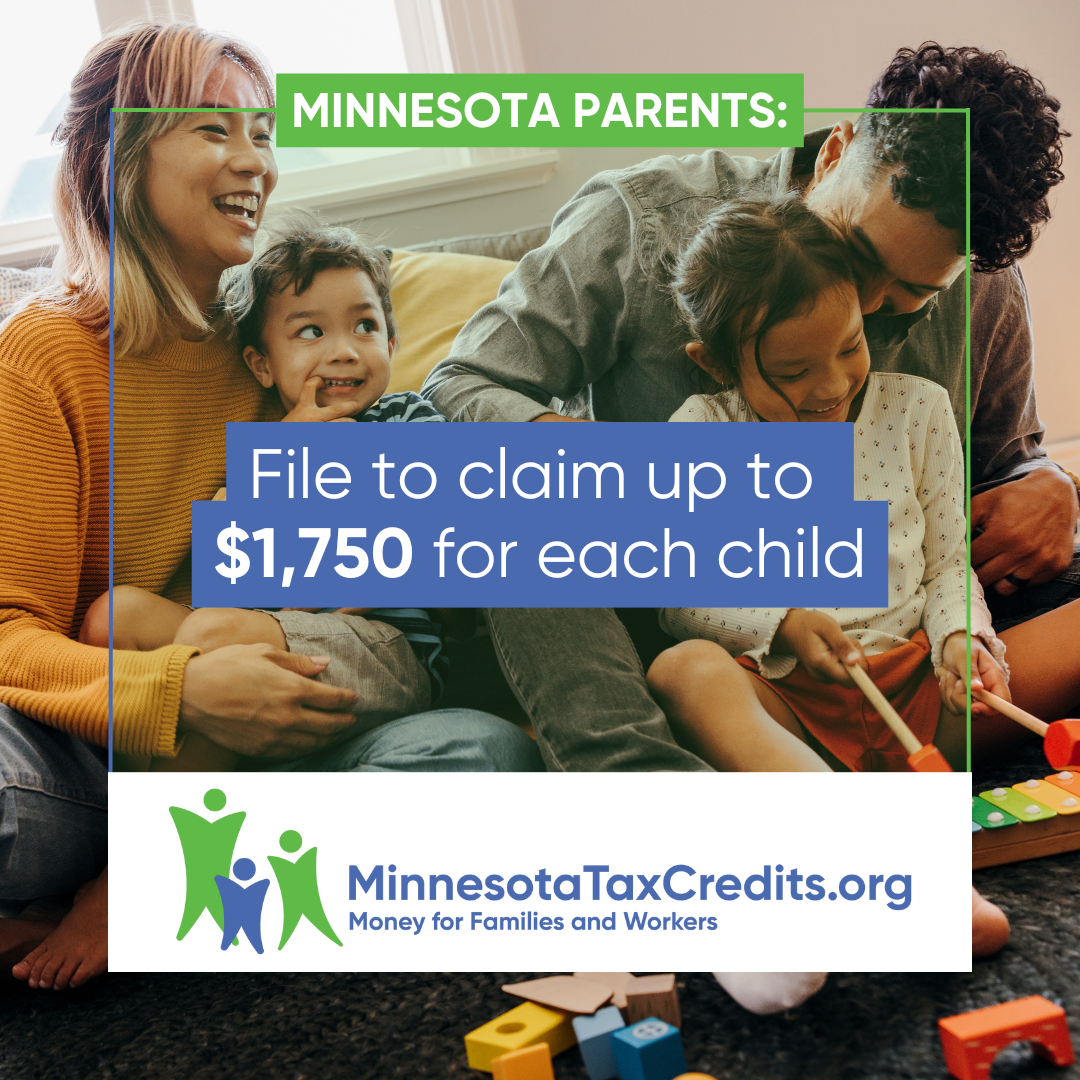
Eligible families can choose to receive part of next year’s Child Tax Credit early. If you qualify, you can opt into three advance payments in August, October, and December 2026, with the remaining amount coming when you file your taxes next spring. A minimum credit is built into the program to protect many families from having to repay those advance payments, if, for example, their income or family size changes.
It’s important to know that choosing advance payments may affect food assistance through SNAP. If you claim the Child Tax Credit without advance payments, SNAP benefits and eligibility are not affected.
If advance payments aren’t the right fit for you, you can always choose to receive the full Child Tax Credit when you file your taxes.
Support for renters
If you rent your home, you may be eligible for the Renter’s Credit on your state income tax return.
Starting last year, renters no longer file a separate Renter’s Property Tax Refund form (Form M1PR). Instead, the credit is now part of your regular state income tax return. It can lower the amount you owe or increase your refund.
When you file, you’ll need information from your Certificate of Rent Paid (CRP), which shows how much rent you paid last year. Your landlord or property manager is required to provide this to you by 1 فبراير.
Other credits to know about
There are additional federal and state credits that can help families, including the federal Earned Income Tax Credit و Child Tax Credit و Minnesota’s K-12 Education Credit. These tax credits help build stability, opportunity, and financial resilience for Minnesotans.
Want to learn more or help spread the word?
ال Minnesota Budget Project, Children’s Defense Fund–Minnesotaو Prepare+Prosper have teamed up to create helpful tools and resources. Visit MinnesotaTaxCredits.org to learn more about available tax credits, eligibility, and free or low-cost help with filing your taxes. Share this information with others.
Together, we’re building a stronger, fairer future where all Minnesotans can be financially secure and have a better opportunity to thrive.