In honor and observation of Hispanic Heritage Month, we’re sharing stories from our Hispanic and Latine colleagues at McKnight. We asked:
What does your Hispanic heritage mean to you, and how does it shape who you are?
We’re honored to share this powerful reflection from Senior Program Officer Sarah Hernandez, who leads our work on economic acceleration and worker justice within McKnight’s Vibrant & Equitable Communities Program.
My Mexican heritage is rooted in family, faith, resilience, and sacrifice. When I think about what it means to me, I think first of my mother’s father, Grandpa Cesario Guzman Huerta—his dusty work clothes, callused hands, and his quiet ways of expressing his love and support.
He was born on September 16, 1893, a date most famous as Mexican Independence Day. That day marks the beginning of Mexico’s war for freedom from Spain, when the call for independence was first made in 1810. Knowing that my grandfather was born on that day gives his life an added meaning for me. It connects his personal story to a larger history of courage, dignity, and determination.
My grandfather’s story is also part of a much larger family journey. Before making Santa Paula, California his home, my great-grandfather Jose Angel Huerta and my great-grandmother Maria Dominga Gusman Huerta left their home region near Saltillo, Coahuila, Mexico.

In 1895, they began the long journey north with their young children, traveling by covered wagon pulled by oxen toward El Paso, Texas. My grandfather was only a small child then, just two years old, part of a family searching for safety, stability, and opportunity. Their journey was long, slow, and difficult. They faced harsh conditions, uncertainty, and heartbreaking loss along the way, including the death of their infant son. Still, they kept moving forward together.
After reaching El Paso, my great-grandfather’s faith became an important part of the family’s life. Jose Angel worked, preached, and helped build Methodist churches, carrying with him a deep commitment to service and community. Eventually, the family traveled to California and settled in Santa Paula, where they found work, and began to build a new life. I think about what it must have taken for them to leave behind everything familiar and travel more than a thousand miles with young children, trusting that something better was possible.
I was devastated when my grandfather passed away. I was just eight years old, but even at that young age, I understood how deeply I loved him and how much his presence meant in my life. When I remember my Grandpa Huerta as an older man—coming home from work, dusty from cement, reaching into his pocket to give me a dime —I see more than a childhood memory. I see the legacy of a family that endured, worked hard, and loved deeply. His life was shaped by hard work and humility. As a cement mason, he used his hands to build and provide, and he carried himself with quiet generosity.
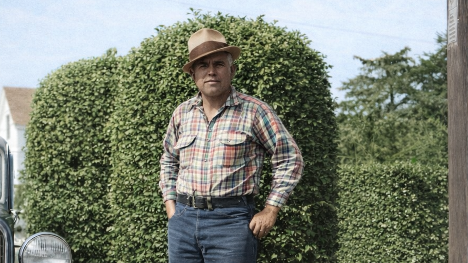
To me, his story represents the strength of so many Mexican and Mexican American families who endured difficult conditions, started over in unfamiliar places, and created a foundation for the generations who followed.
That history shapes who I am by giving me a deep sense of gratitude and responsibility. I carry pride in where my family came from and reverence for what they survived. I also carry an obligation to remember their names, tell their stories, and honor the values they lived: devotion to family, faith, perseverance, generosity, and hope. My heritage reminds me that identity is not only inherited; it is something we carry forward through memory, love, and the choices we make to honor those who came before us.