Category:Impact Story
Hoosiers Work Together for a Brighter Future
“I’ve come to see that one of our greatest opportunities to address climate change lies in how we care for the land.”
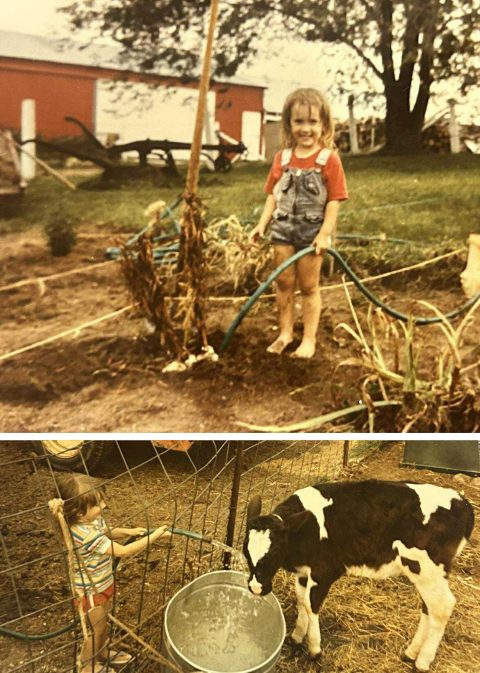
I grew up on a small dairy farm in Marathon County, Wisconsin. My childhood unfolded outdoors—doing chores, playing in the fields, and helping to grow the food our family ate, with any extra sold at local farmers’ markets. When I was in high school, milk prices had fallen and after seventeen years of milking cows, my parents sold the herd. The farm was the center of our lives, and from an early age, the rhythms of the seasons and the cycles of life shaped how I saw the world. They deepened my curiosity about nature and ultimately guided me toward a life in land stewardship.
Life on the farm was a mix of curiosity and responsibility. From the time I was three or four, I had my own little garden patch where I chose what to plant. I fed the animals, helped with calves, and found endless adventure in the land around us. My sister and I often made our own fun by exploring the woods—there was a small patch of trees that became our enchanted world. We built forts from branches and twigs, created rooms, and decorated with wildflower bouquets. Our neighbors let us roam their pastures and woods too. We caught frogs in their ponds, watched a blue heron nest nearby, and ate sun-warmed blackberries until our fingers were stained purple. There was so much aliveness in that unstructured play. I savored every moment outdoors and dreaded the call to come inside as darkness fell. Outdoors I felt adventure, safety, and comfort—I was never afraid. Now, as I encourage my ten-year-old daughter to play freely outside, I sometimes worry her generation feels more distant from these simple, grounding experiences.
Around the dinner table, our family often talked about the bigger picture beyond our home—I vividly remember conversations about protecting rainforests, saving marine life, and recycling. It was the 1980s, and my view of caring for the Earth meant caring for faraway places rich in biodiversity. I didn’t yet realize how deeply the changes we saw on our own farm—the weather shifts, the crop impacts—were connected to those same global systems.
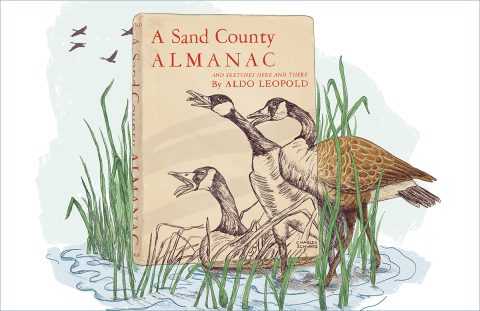
In high school, a friend’s father handed me a copy of A Sand County Almanac by Aldo Leopold. I had no idea how profoundly that book would influence my life—or that I would one day spend nearly twenty years caring for the same acres Leopold once did, as a staff member at the Aldo Leopold Foundation. Leopold’s reflections from the 1940s on the “land ethic” became a touchstone for me. Working on those same lands decades later, I often returned to his essays, comparing his observations with my own.
By the late 1990s, climate change was entering mainstream conversation. I wanted to understand it deeply, so in college I studied wetlands, ornithology, and fire ecology. Early in my career as a land steward, I began noticing its effects firsthand and in global news—stronger storms, more frequent droughts and floods, high winds, wildfires, and widespread erosion. Each of these impacts interact in complex ways within our ecosystems.
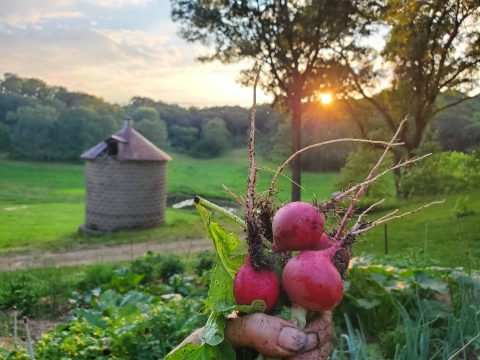
Learning about topsoil loss brought the issue home for me. Scientists estimate that the U.S. loses billions of tons of topsoil each year—soil that can take centuries to rebuild—threatening the foundation of healthy food systems and long-term agricultural productivity. Climate change amplifies this loss through heavier rains, stronger winds, and shifting seasonal patterns.
But I also learned about solutions; regenerative practices like planting cover crops that help restore soil health, and reduce erosion and runoff, protecting waterways that are growing increasingly polluted. The connections became undeniable: even a seemingly small disruption or solution can ripple through the whole system. This understanding has shaped my belief that caring for agricultural and conservation lands is not just important—it’s vital to our collective future.
“Even a seemingly small disruption or solution can ripple through the whole system. This understanding has shaped my belief that caring for agricultural and conservation lands is not just important—it’s vital to our collective future.”
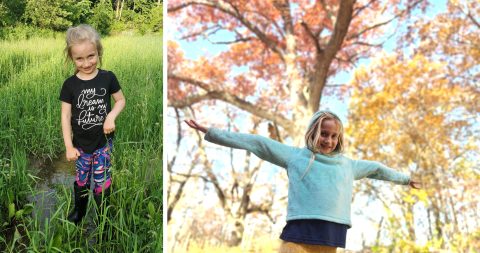
Some of my most pivotal insights about climate change have come through conversation. In my current role as Wisconsin lead for Climate Land Leaders, one woman told me, “I’m using my agency as a landowner to make the biggest difference I can on climate change.” Her words sparked a new urgency in me—stronger than anything I’d felt before. Thinking about my daughter and the world her generation will inherit, I often ask myself: how can she have a healthy, safe, thriving life in a rapidly changing world? It brings me back to the land, our connection to it.
I’ve come to see that one of our greatest opportunities to address climate change lies in how we care for the land. Books like An Immense World by Ed Yong, The Light Eaters by Zoë Schlanger, and The Seed Keeper by Diane Wilson remind me that we are always learning from others and from the land—that there is always more to know about being part of a place. Through observation and care, I’ve seen how intention truly matters. The land stewards within the Climate Land Leaders community are living examples of this ethic of care.
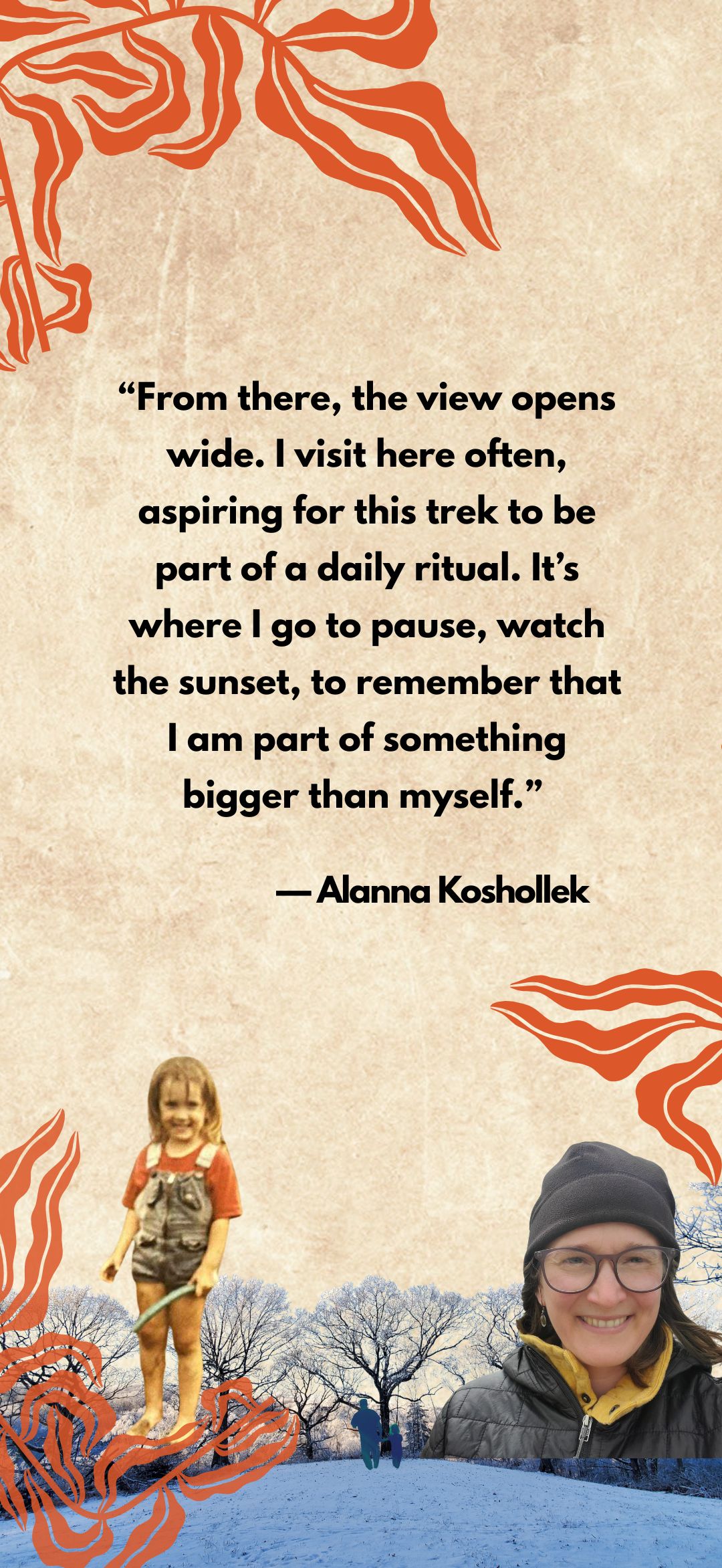
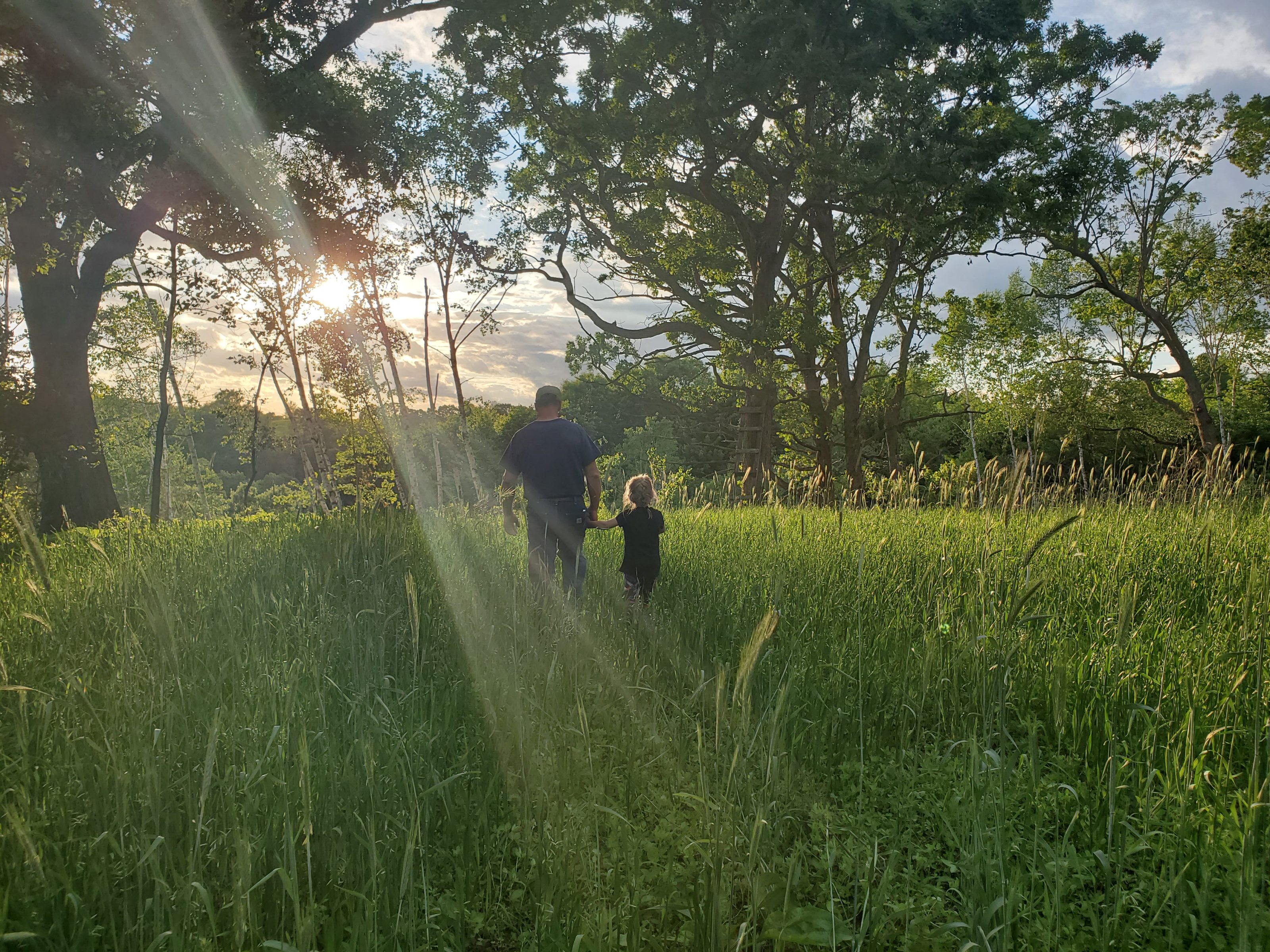
There’s a place on our farm, a half-mile walk from our home, on a path that begins at the old gravel road—now slowly being reclaimed by vegetation—and winds through the woods to a small hilltop overlook. From there, the view opens wide. I visit here often, aspiring for this trek to be part of a daily ritual. It’s where I go to pause, watch the sunset, to remember that I am part of something bigger than myself. There on the fringe of Wisconsin’s Driftless Region in Jackson County, stand four enormous White Oaks, like sentinels—majestic, enduring. I visit them often, sometimes alone, sometimes with my daughter or husband. The hilltop is part of a trail network that meanders through our sixty acres of woodland and prairie, following the natural slopes of the land. At the summit, the trees form a kind of open amphitheater. Oaks and hickories thrive here, fire-adapted species perfectly suited to the southwest-facing slope. Over time, we’ve worked to restore this Oak savanna, removing early-succession species like birch to let light return to the understory.
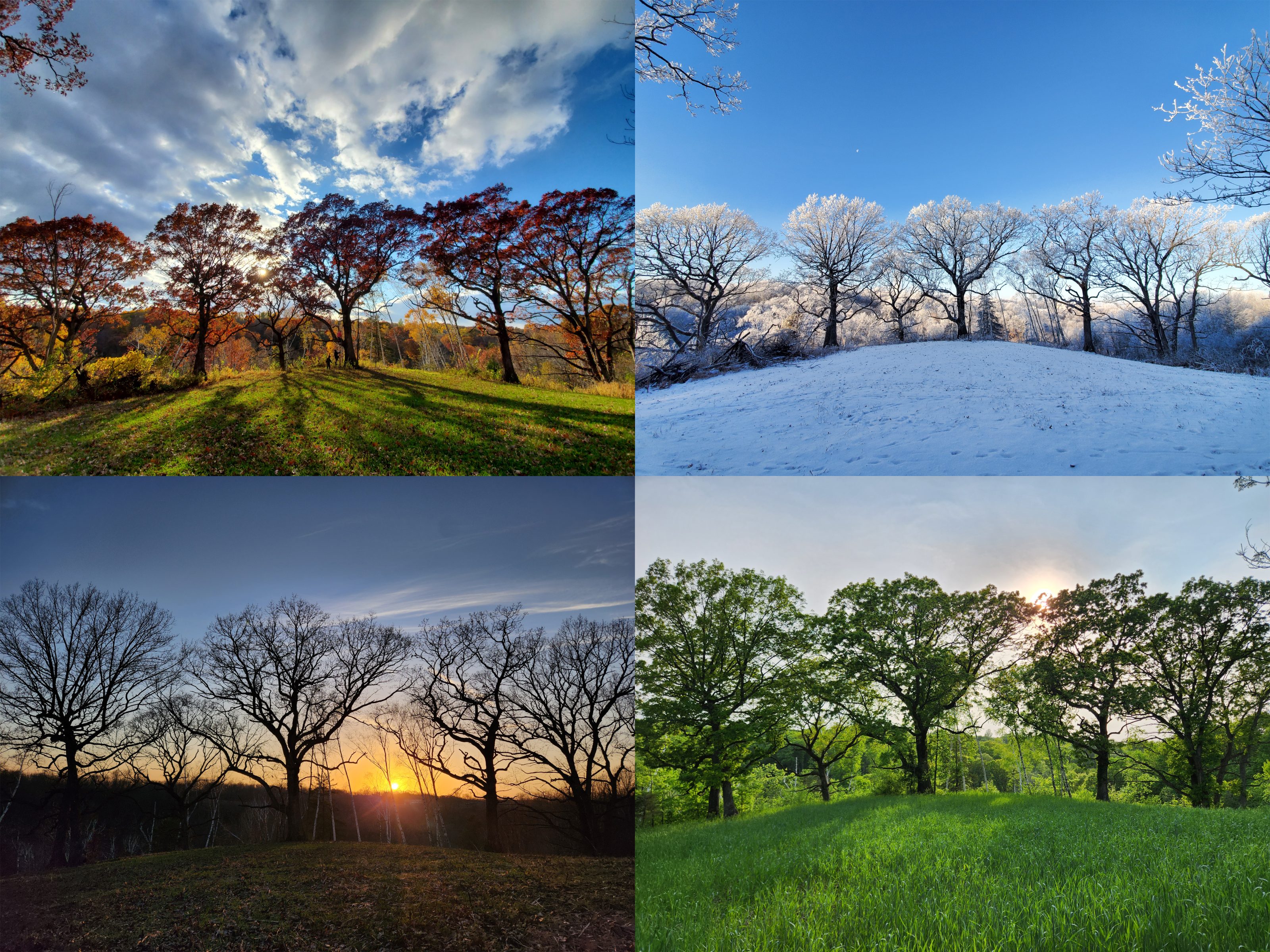
Recently, I visited our county office and found the original land patent, signed in 1882. We are the ninth family to live here in the past 143 years. These are the ancestral lands of the Dakota people. Considering the remnant prairie and savanna species still growing, I imagine this place once supported broad-canopied white oaks and a mosaic of open prairie catching the western sun. Over generations, people cared for these lands, and with colonization the prairie was plowed, livestock grazed, and the largest trees were harvested. Many of the smaller trees in our woods today are older than they appear—crowded, stunted survivors from when the canopy was cut. Still, the land remembers.
When I reach that hilltop, I always pause to give thanks—to the land, to those before us, and to those who will come after. The four oaks stand as living witnesses to the endurance of care. They are standing today because those before us actively or passively decided to let them stand. Their presence reminds me that stewardship is a legacy—one we inherit and one we pass on. Standing beneath their branches, I feel that same childlike wonder again, of the woodland dwellings my sister and I cherished. I am drawn into thoughts of early lessons of the cycles of life and death on the farm, and I’m reminded that the land is both teacher and home.
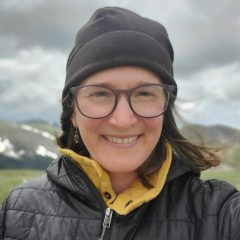
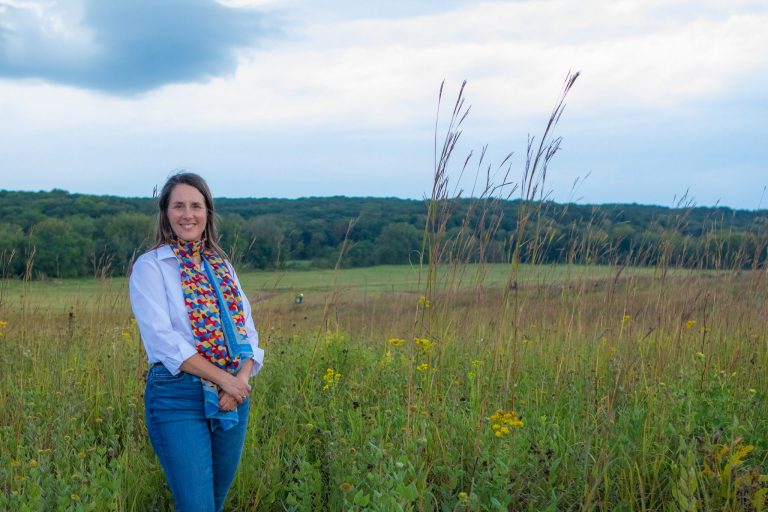
About the Author: Alanna Koshollek is an independent contractor serving as the Wisconsin Lead at Climate Land Leaders. A lifelong maker and nature lover, she’s a daughter, sister, mother, and wife with a passion for gardening, crafting from natural materials, cooking with the seasons, reading, and wandering outside.
About this Project: Alanna’s story is co-produced with Change Narrative LLC, in partnership with McKnight Foundation’s Midwest Climate & Energy Program. Read more essays from the series: Midwest Climate Leaders Share Stories of People and Place.