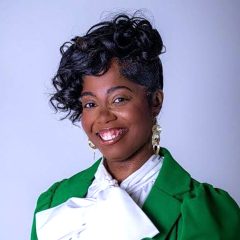
Personal essay by Marnese Jackson, Executive Director, Midwest Building Decarbonization Coalition
“I want to be part of building a future where everyone feels a true sense of dignity—where communities are filled with active, lived hope, not just aspiration. A future where justice is visible in people’s faces and reflected in our realities.”
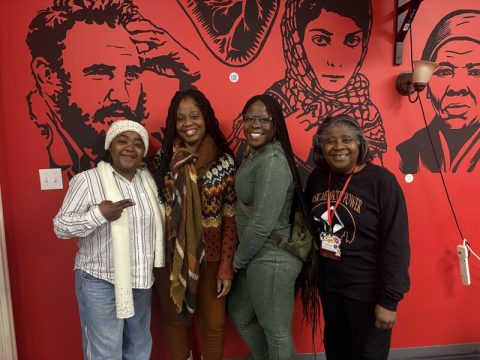
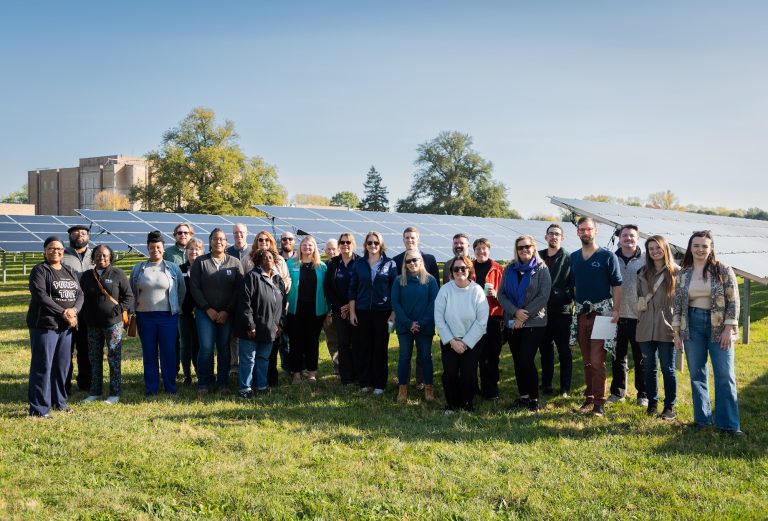
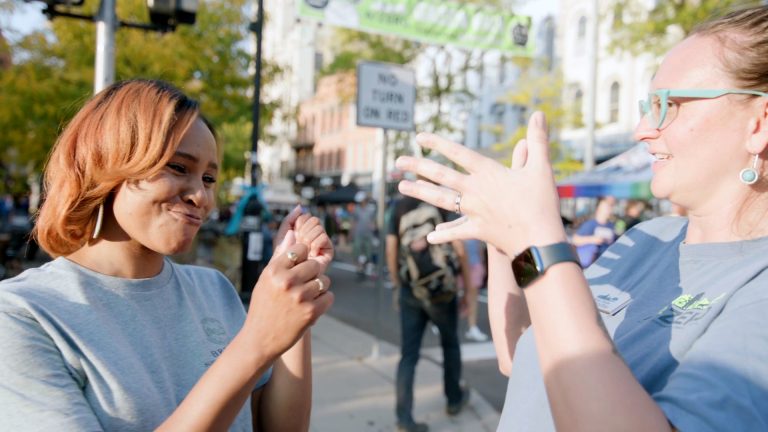
Marnese Jackson and fellow Midwest BDC staff attend a community event.
Since 2024, I have served as the Executive Director of the Midwest Building Decarbonization Coalition (Midwest BDC), working to advance an equitable approach to decarbonization across the region through capacity-building and collective action. Our focus is on empowering people and partners to engage in this work and to help make our communities healthier, together. At BDC, our goal is to achieve zero emissions from the Midwestern building sector by 2050.
The Midwest has a unique opportunity to lead on just climate solutions. We face some of the highest utility rates in the country, and our region is also a major contributor to climate emissions—particularly from the building sector. At the same time, we continue to live with the legacy of unjust redlining in housing and the impacts of industrial zoning placed alongside residential neighborhoods in many of our urban communities. That’s why it’s critical to ensure that all communities have the tools and resources needed to respond to climate change and to experience equitable disaster recovery.
At Midwest BDC, our work has been emergent and responsive to these needs. Recently, we’ve focused on educating communities about the Inflation Reduction Act (IRA)—helping people understand available funding opportunities and working to ensure those resources reach the communities that need them most. With recent rollbacks and challenges to the IRA and climate justice efforts more broadly under the federal administration, we’re left with real questions about what comes next—especially when the urgency of this work has never been clearer.
This work is my profession, but it isn’t my credentials that matter most—it is my lived experience, which has made it personal.
My children are the reason I will always give everything to fight for a better world—they’ve given me clarity and a sharpened sense of focus. They both have asthma, and when they were little, it was incredibly difficult. As a parent, there’s a helplessness in watching your children struggle to breathe—especially when you don’t understand why it’s happening. At the time, we were living in Pontiac, Michigan, in a neighborhood next to a filtration treatment center. I didn’t fully grasp what that meant until my children’s symptoms persisted and it became impossible to ignore the connection between where we lived and how they were breathing. I began to look closer. What I found was deeply unsettling: toxic chemicals, emissions, and a pattern that disproportionately affected families like mine—those living on the fenceline of industry. It wasn’t just about my children anymore. It was about an entire community exposed to harm simply because of where we lived and played. As a mother, I couldn’t stand by and accept that. For me, taking action wasn’t a choice—it was a necessity. I connected with the local NAACP, who were already organizing against the filtration plant, and found both community and momentum there. I began speaking at City Council meetings, naming what I was seeing—the direct connections between pollution and our health.
As I kept learning and speaking out, the bigger picture came into focus. The intersections with climate change, environmental justice, and the urgent need to decarbonize became impossible to ignore. What was happening in our neighborhood wasn’t isolated, it was a familiar pattern of injustice.
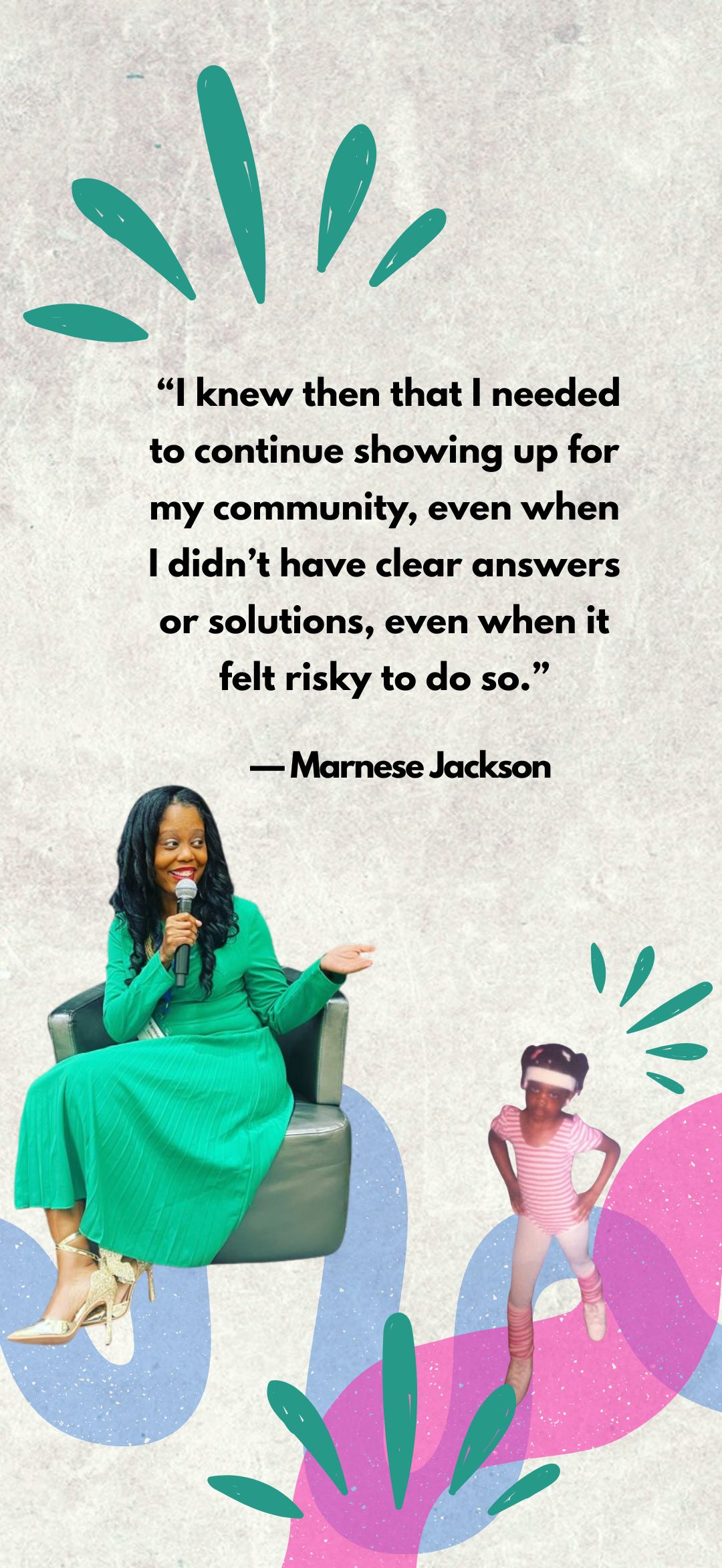
Marnese as a child.
Being an advocate and activist has always felt natural to me. From an early age, speaking up and pushing for change has simply been part of who I am. I remember being in sixth grade and realizing how unfair things could be. Our school lunch program was unhealthy and unappealing—we’re talking old, stale pizza. We were a Title I school, and I could see the contrast through my cousin, who attended a more affluent district where meals were fresh and nutritious. It didn’t feel right that something as basic as food quality depended on where you lived or how much money you had. So I wrote a petition and passed it around the school, gathering signatures from other students who felt the same way. We fought and won a breakfast program, and healthier lunches.
By high school, that instinct to speak up had only grown stronger. I was senior class president when I began to uncover that our principal was embezzling money. True to who I am, I started researching and raising awareness with parents. But speaking out came at a cost—I was expelled for protesting. A week later, I was allowed to return, but the consequences didn’t end there. Because of the backlash, I lost my eligibility for a student nomination to the homecoming court. Still, the truth had begun to surface. A group of parents, including my mom, took up the fight, and about a year later, the principal and others involved were convicted and sent to prison for embezzlement from our school. It was a lot to carry at such a young age—learning what it means to push for justice when there are real risks involved. I remember a teacher who knew what was happening but chose not to speak up out of fear of losing their job. That stayed with me. Even now, I think about those early moments and how they connect to the world we live in today—the complicated reasons people stay silent, even when they know something isn’t right, whether climate justice or immigrant rights. Fear can be powerful. But so is the decision to speak up anyway.
My path into this work wasn’t through studying environmental or climate justice. I went to school for public relations and community development. I came to see how essential those skills are for organizing people, building momentum, and driving meaningful change. It showed me that whatever your background, you can use what you have to make a difference. But it was my own experiences that spoke the loudest.
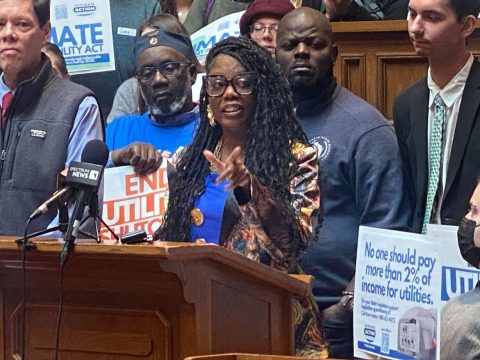
Marnese speaks up about utility shutoffs and their impact on families.
In college, I experienced energy insecurity firsthand. My roommate and I couldn’t afford our utility bill, and our lights were shut off. To get service restored, we were placed on a steep balloon payment plan—an overwhelming burden for two students relying on work-study income. Later in life, as a parent, I faced that reality again—but this time, the stakes were much higher. When our electricity was shut off, it wasn’t just an inconvenience; it was a crisis. No parent should have to navigate the anxiety and instability that comes with shutoff notices—especially knowing they can sometimes draw the attention of child protective services. Those experiences stayed with me and pushed me to get involved in utility justice work. In a state like Michigan, where winters are harsh and unforgiving, energy shutoffs are not just unjust—they’re dangerous. It is vulnerable to talk about these things, especially when they are your lived experience, but it is also brave, because telling our stories is important for people to be seen in their reality and to expand the conversation.
“When our electricity was shut off, it wasn’t just an inconvenience; it was a crisis. No parent should have to navigate the anxiety and instability that comes with shutoff notices—especially knowing they can sometimes draw the attention of child protective services. Those experiences stayed with me and pushed me to get involved in utility justice work.”
In 2005, when Hurricane Katrina devastated New Orleans and surrounding areas, a place where I have family, I felt a deep need to help in whatever way I could. I got involved in fundraising and advocacy, doing what was within my reach to contribute. I volunteered with the Red Cross, helping distribute food and resources on the ground. When I arrived, I remember the stench in the air, a sign that things were off. I stepped into the overwhelming sense of chaos and despair, and witnessed people under unimaginable stress. There was gratitude when people received food and assistance—but also a heaviness, a kind of exhaustion. I perceived hopelessness in so many faces that I can’t forget. The majority of those left behind in the aftermath of Hurricane Katrina were low-income Black residents. It made clear to me that the systems designed to respond in moments of crisis too often fail the very people who need them most. According to Troy D. Allen, in the Journal of Black Studies, “In the city of New Orleans, communities of color made up nearly 80% of the population in the flooded neighborhoods.”
That day, it felt like any semblance of rose-colored glasses came off. I began to see with sharper focus the intersections of racial justice, climate justice, and economic justice.
A question surfaced in me: is this really what it is like to be Black in America? I understood that the closer I got to this work, the more I would have to grapple with those realities—the faces of people living through systems that were failing them. I knew then that I needed to continue showing up for my community, even when I didn’t have clear answers or solutions, even when it felt risky to do so.
What I witnessed in the aftermath of Hurricane Katrina did something to my psyche that I still carry. The faces of people left in such desperate conditions, the feeling of not being able to do enough. It’s something I continue to turn over in my mind. I’ve come to understand that this is part of the emotional weight of justice work, and why it’s so important to find ways to stay grounded. I’ll be going on a healing retreat for social justice workers to think more deeply about how we navigate this collectively—how we sustain ourselves in work that is often exhausting, and how we keep showing up even when we don’t always know what to do next. I hope it can help me redefine and stay present in the work.
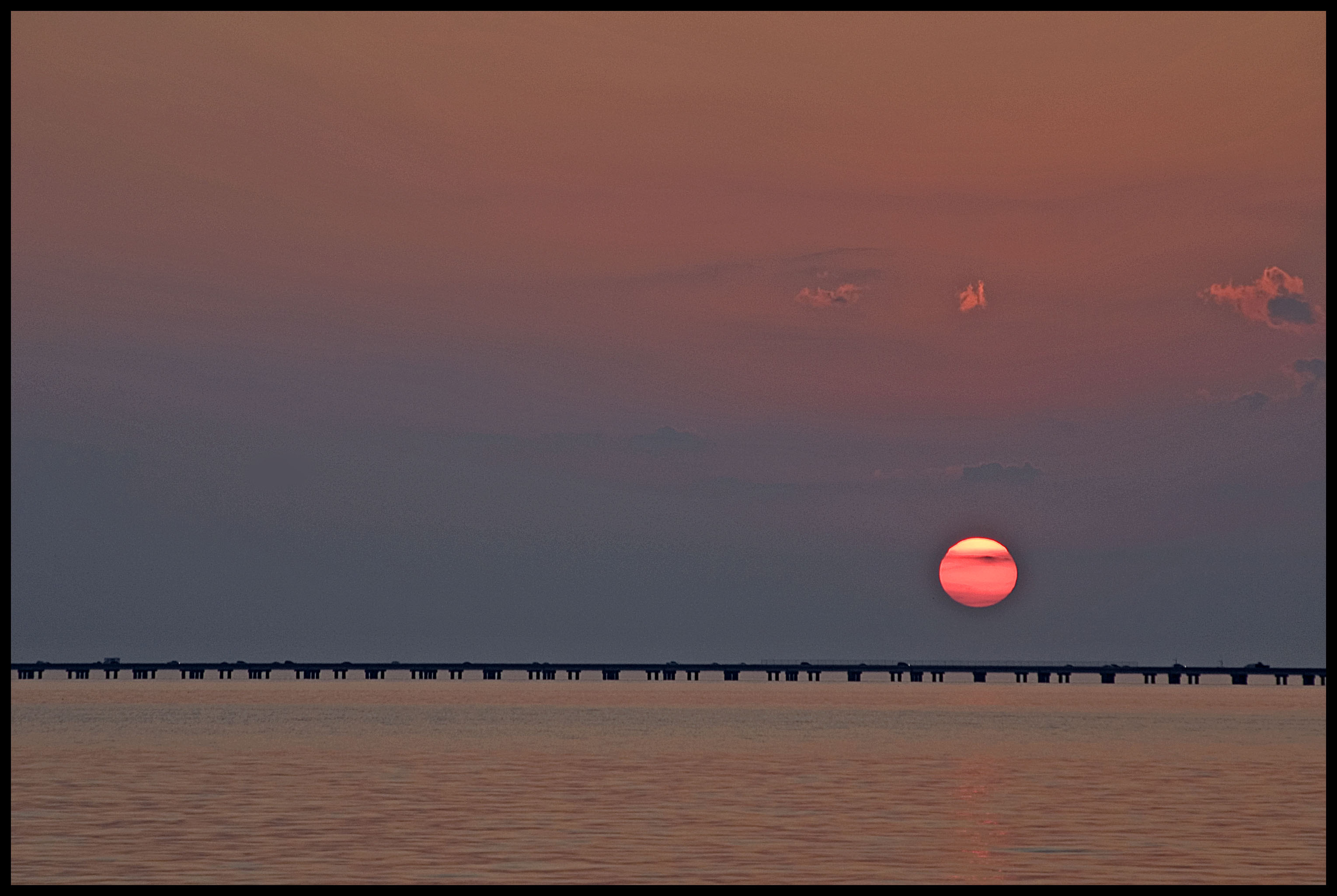
Sunset over Lake Pontchartrain in Louisiana. Photo by Peter Clark.
When the work becomes overwhelming, I remind myself that it’s better to take a break than to quit. That requires recognizing when I’m over capacity, and learning to schedule and honor rest instead of pushing through it. I’ve started playing the flute again as a way to reconnect with myself, to remember who I am—without the burdens I feel for people. Interestingly the place that always brings me back to myself is New Orleans, especially the waters of Lake Pontchartrain. Being there feels like a kind of reclamation—a return to a place that carries both deep trauma and profound joy, and where my ancestors are rooted. In that space, I feel held. It’s as if I’m being reminded by those that came before: you are safe, you will be fine.
I want to be part of building a future where everyone feels a true sense of dignity—where communities are filled with active, lived hope, not just aspiration. A future where justice is visible in people’s faces and reflected in our realities.
About the Author: Marnese Jackson is the Executive Director of the Midwest Building Decarbonization Coalition (Midwest BDC), advancing equitable decarbonization through capacity building and collective action, with a focus on creating healthier and more just communities.