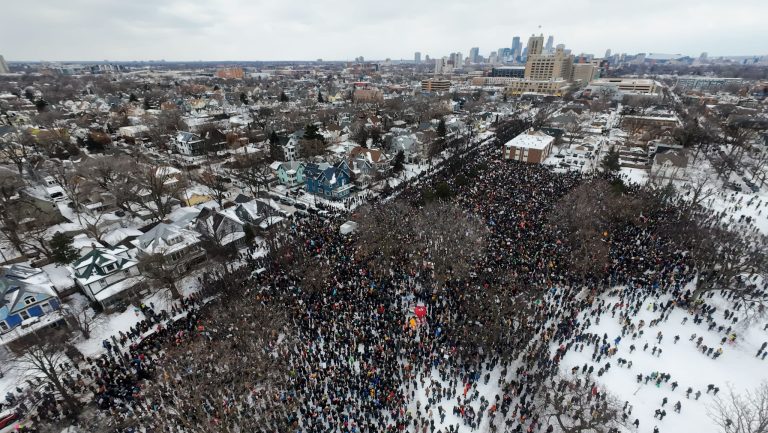
![A group of protesters in winter gear. One person holds a sign that reads "We [heart] our neighbors."](https://www.mcknight.org/wp-content/uploads/1.23.26-MinneapolisMarch-12.jpg "A group of community members speak out in support of their immigrant neighbors in Minnesota. Photo credit: Molly Miles")
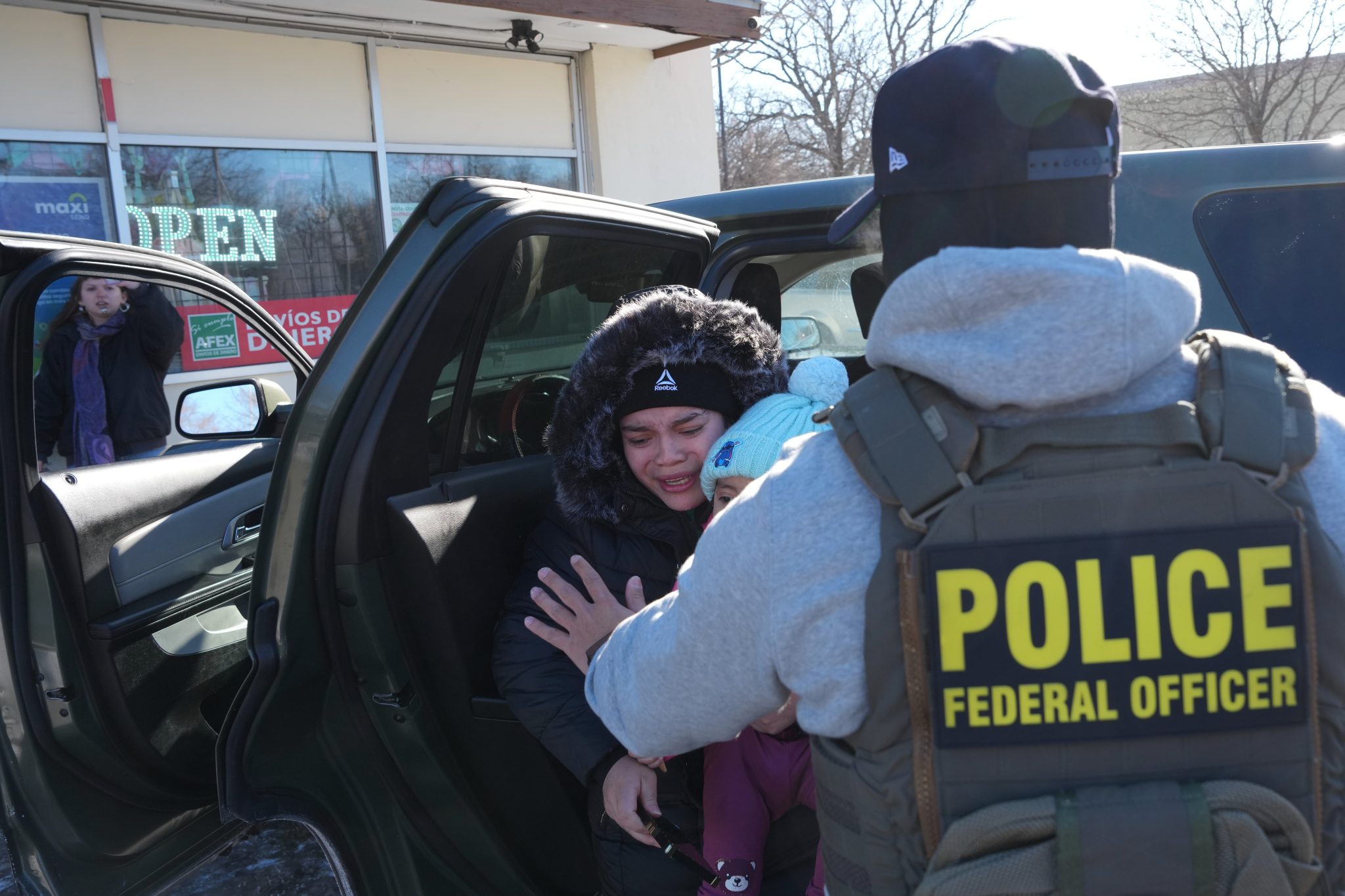
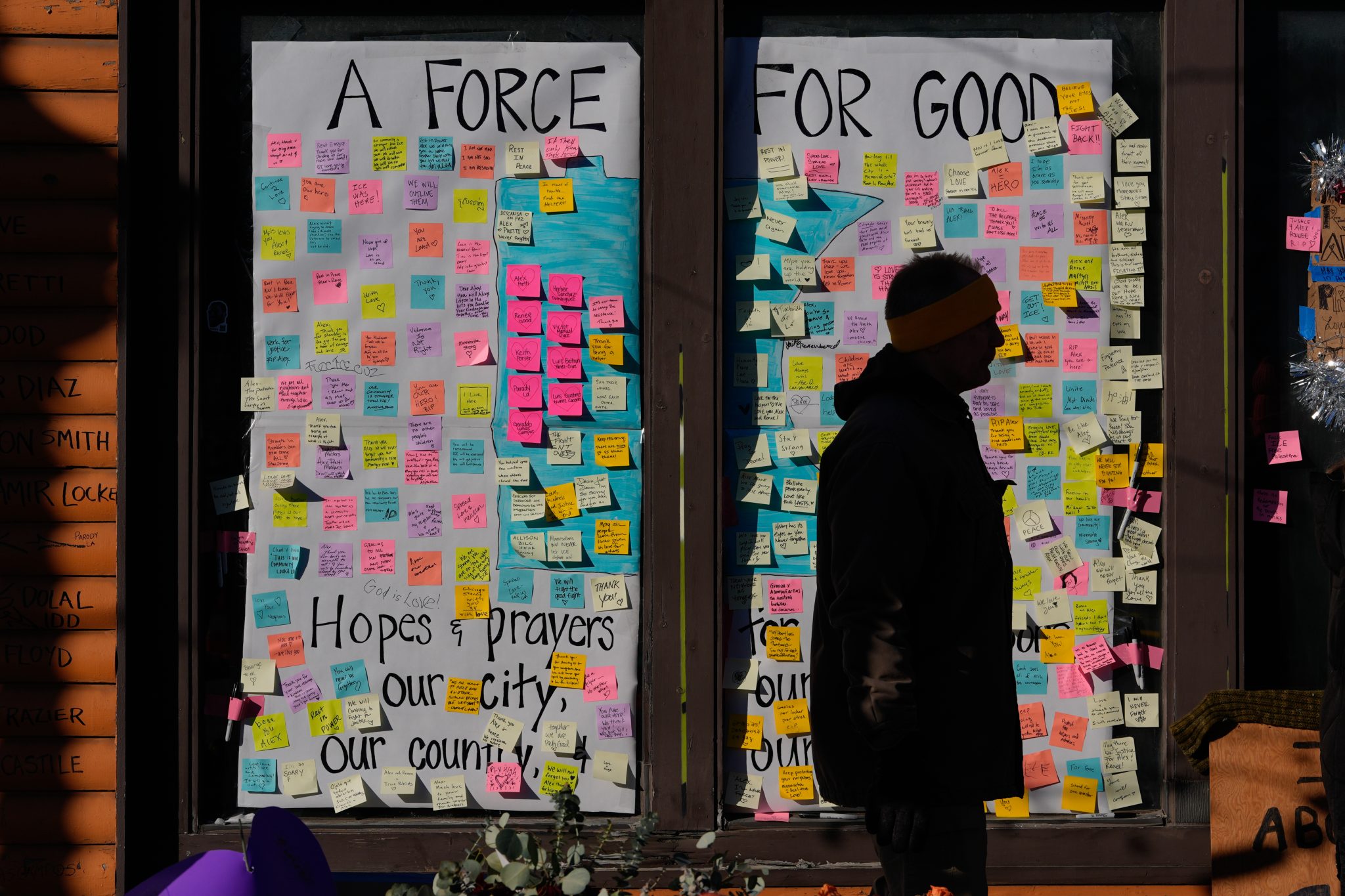
In the weeks since the federal immigration enforcement surge began in Minnesota, daily life across the state has been upended, not randomly, but through a familiar pattern of disproportionately targeting people based on their place of birth and what they look like. Communities have rallied to defend, protect, and care for neighbors who have been targeted and harmed, while also grieving the devastating losses of Renee Good and Alex Pretti—whose deaths at the hands of federal immigration agents have seared this moment into our collective memory.
While border czar Tom Homan recently announced the immediate surge is ending, the harms unfolding now will not disappear when federal activity shifts, or the news cycle moves on. There are long term impacts to housing, jobs, schools, and local economies, and our communities need partners who are willing to stay, invest, and help rebuild the stability that every family deserves.
Beyond the profound human toll, communities across Minnesota have described daily life under Operation Metro Surge as feeling like a federal occupation, not a public‑safety initiative. Families who once moved freely through their neighborhoods have been altering even the simplest parts of life—grocery runs, school drop‑offs, commuting to work—because the influx of thousands of federal agents introduced fear and unpredictability into otherwise ordinary spaces. Due to heavy federal presence at schools and daycares, many parents adjusted work and care arrangements for their children’s safety. Schools across the state—from Minneapolis and Saint Paul to metro-area suburbs to Greater Minnesota communities—have reported sharply reduced attendance. Many have also instituted virtual learning options as students stay home to avoid potential encounters with agents. These conditions are not accidental; they are the predictable outcome of enforcement strategies that prioritize punishment and visibility over care, stability, and community well‑being.
“This fear doesn’t just cut off income, but the everyday connections that help families stay anchored in place—isolating families and disrupting the daily routines that keep neighborhoods, schools, and local economies strong.”– MUNEER KARCHER-RAMOS
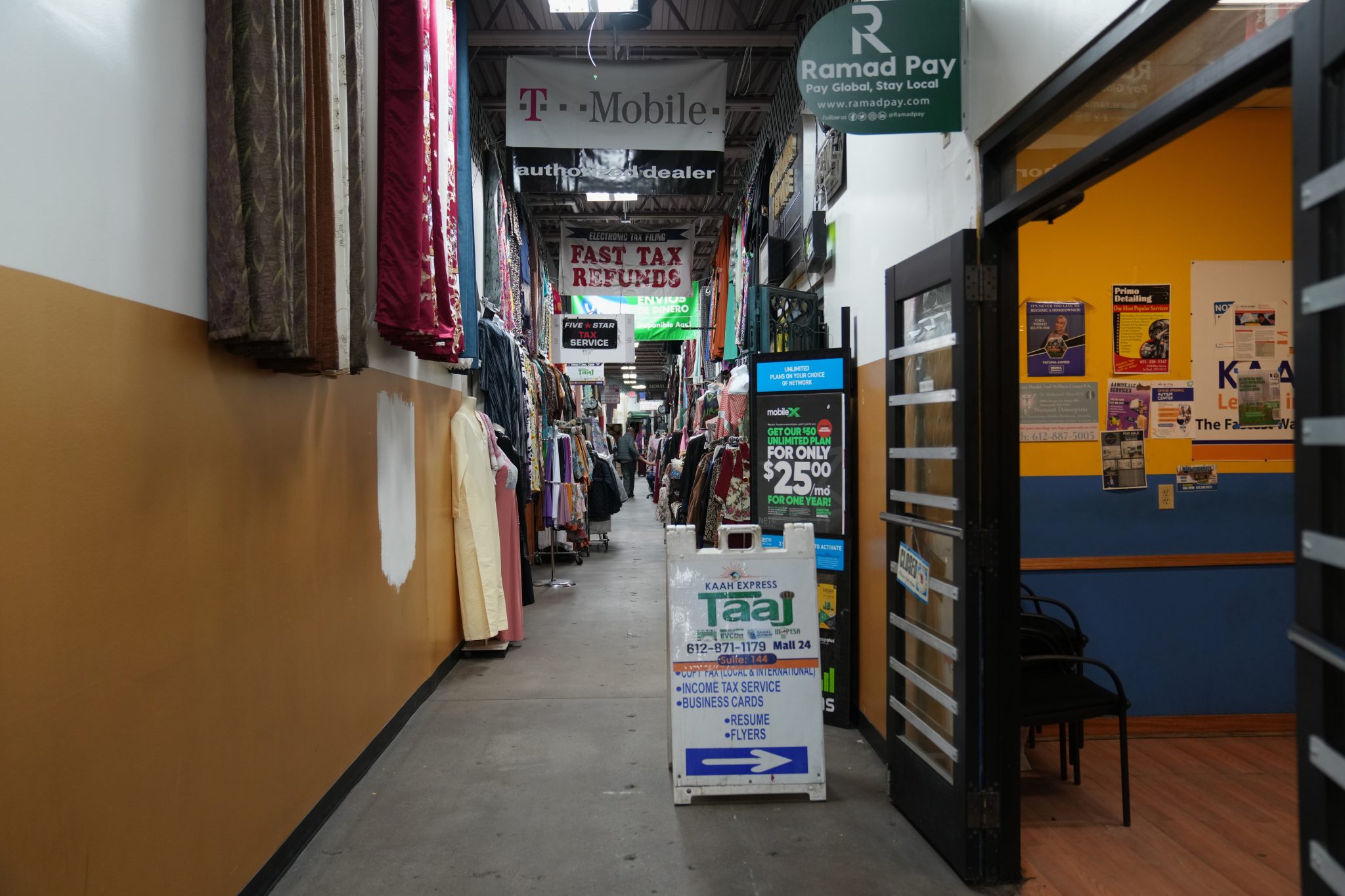
Immigrant‑owned corridors that typically hum with activity, including Lake Street, the Midtown Global Market, Payne Avenue, and key Hmong markets and Somali community hubs, have fallen quiet as workers stay home and customers avoid public spaces. Some businesses have closed their doors—not because they want to, but because the people who sustain them no longer feel safe moving through their own neighborhoods.
This fear doesn’t just cut off income, but the everyday connections that help families stay anchored in place—isolating families and disrupting the daily routines that keep neighborhoods, schools, and local economies strong.
For hourly workers forced to stay home—whether due to lost hours or safety fears—missing even a few shifts can make covering rent or the mortgage nearly impossible, not because families are unprepared, but because decades of wage suppression, housing disinvestment, and exclusion from wealth‑building opportunities have left many households with no margin for disruption. In a state already facing a severe housing shortage, rising evictions, and widespread rent burden, even minor income gaps can quickly lead to eviction or displacement. This enforcement surge accelerates displacement that was already structurally baked into Minnesota’s housing system—especially for communities of color.
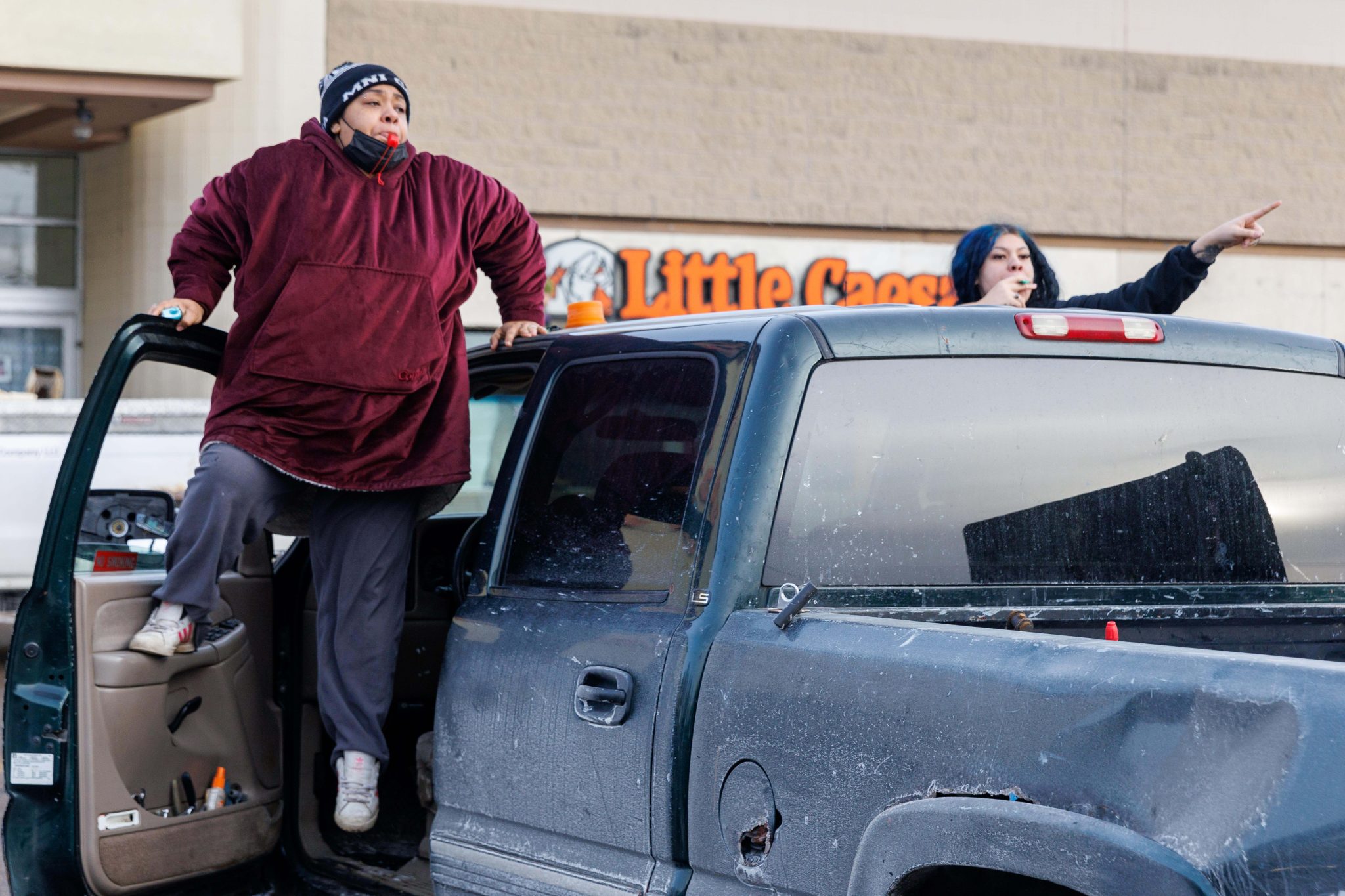
Closed Shops and Small Business Struggles
As daily life constricts across Minnesota, small businesses—especially those run by immigrant families—are feeling the strain. For many, this isn’t just about lost sales; it’s about seeing years of hard work and trust unravel. Owners are struggling to keep staff, as workers stay home for safety or to care for their kids. Some try to keep going with a skeleton crew, while others are forced to cut hours or close, knowing the risks are too high and margins too thin. Some have even described their shops as “hunting grounds” for federal agents, a reality that threatens both their livelihoods and the sense of safety they’ve built for their communities.
These disruptions ripple through local economies. In Greater Minnesota, many communities rely on immigrant workers in key industries like agriculture and manufacturing. Across the state, restaurant closures hurt suppliers, reduced market hours mean fewer customers for nearby stores, and entire business corridors falling quiet result in direct harm to collective financial security and culture. The effect is especially significant in Minnesota, where immigrant workers and business owners contribute a substantial portion of the state’s economy, generating $41 billion annually. These dynamics reveal how deeply Minnesota’s prosperity depends on immigrant labor and entrepreneurship—while public policy continues to extract economic value from these communities without extending safety, stability, or full belonging in return.
“Without immigrants’ economic participation and tax contributions, government debt at all levels—local, state, and federal—would be dramatically higher.”
– MUNEER KARCHER-RAMOS
Immigrants’ economic contributions add up nationally, too. Analysis from the Cato Institute shows that, from 1994 through 2023, immigrants in the United States have consistently contributed more in taxes every single year than the cost of federal, state, and local benefits they received. Over the three-decade period, immigrant communities generated a cumulative $14.5 trillion fiscal surplus, including $3.9 trillion in reduced interest payments on public debt. Without immigrants’ economic participation and tax contributions, government debt at all levels—local, state, and federal—would be dramatically higher. Cato’s analysis estimates that U.S. public debt would have reached at least 205 percent of GDP, nearly double its 2023 level. These findings underscore how essential immigrants are, not only to local economies, but to the long-term fiscal stability and prosperity of the entire nation.
While economic data helps quantify the damage, it is not the justification for dignity. Immigrant communities are essential not only because they generate revenue and tax base, but because they are central to Minnesota’s cultural life, civic health, and long‑term collective prosperity.
Rising Economic Costs Affect All of Minnesota
The massive economic fallout from Operation Metro Surge is no longer just a theory. Early reports reveal a dual crisis: soaring public spending and a rapid contraction of Minnesota’s local economies. Data compiled by North Star Policy Action shows the operation is costing taxpayers an enormous $18 million per week, while also driving a sharp drop in statewide economic activity.
According to the North Star Policy report, taxpayers are paying at least $9 million a week on ICE and CBP agent wages, while another $4.5 million disappears into lodging and meal costs. Detention expenses tack on another $1.6 million each week, and local police departments are shelling out around $3 million in overtime as they scramble to manage the upheaval sparked by federal enforcement. These numbers don’t even touch the bigger-ticket items—vehicles, damaged gear, munitions, helicopters, transfer flights, or the inevitable civil penalties down the road. The real cost to taxpayers? It’s almost certainly much higher than what’s reflected here.
The long-term economic damage of Operation Metro Surge may take years to fully surface. Reduced construction during an already severe housing shortage will drive up housing costs for everyone. Fear-driven cancellations of medical appointments will increase downstream health care expenses, while needs for mental health support will increase from heightened stress and trauma. Persistent school absences could depress educational attainment for an entire generation. North Star Policy Action’s analysis predicts the compounded impacts are likely to result in billions of dollars in economic damage to Minnesota.
What We’re Hearing from Communities on the Ground
Across the state, our grantee and community partners are describing a moment defined not only by fear, but by an urgent need for information, coordination, and support. Hotlines that typically field a steady but manageable flow of calls are now overwhelmed as residents seek guidance on everything from how to respond to federal encounters to how to protect family members if someone is detained. Legal aid groups and rapid‑response coalitions are expanding hours, adding staff, and partnering across networks to meet a surge in requests for rights education, safety planning, and assistance navigating sudden detentions.
“Across the state, our grantee and community partners are describing a moment defined not only by fear, but by an urgent need for information, coordination, and support.”– MUNEER KARCHER-RAMOS
At the same time, organizers are reporting an emotional landscape marked by exhaustion, grief, resolve, and—yes—hope. Faith leaders, neighborhood associations, and cultural organizations have stepped in to provide calm, reliable information and emotional support, often becoming the first call people make when they see enforcement activity in their community. Volunteers are coordinating transportation, interpretation, and accompaniment for court appearances that arise with little warning. And in Greater Minnesota, where enforcement actions intersect with tight‑knit towns and limited-service infrastructure, community groups are filling critical gaps—offering everything from pop‑up legal clinics to school‑based outreach to ensure families stay connected to the resources they rely on.
These frontline accounts reveal a collective response that is rapid, compassionate, and deeply resourceful—not simply as crisis response, but as community‑led infrastructure building in the absence of systems designed to protect them. They also underscore how much strain community-serving nonprofits are carrying as they work around the clock to keep people informed, safe, and connected. In this moment, their leadership is not only helping families navigate the immediate crisis—it is preventing fear from fracturing the social fabric that holds Minnesota’s communities together.
The Path Forward: Standing With Communities for the Long Run
Minnesotans have shown in unmistakable ways that when people are threatened, we show up for one another. The response we’ve witnessed—from neighbors stepping in to keep families safe, to rent support and mutual aid drives, to community organizations expanding their support networks overnight—demonstrates the deep well of strength and solidarity that defines this state. But communities cannot shoulder this work alone, they need partners who are in it for the long haul. The harms unfolding now will not disappear when federal activity shifts, or the news cycle moves on. They require partners who are willing to stay, invest, and help rebuild the stability that every family deserves.
Through the Vibrant & Equitable Communities program, McKnight is committed to being one of those partners. Throughout the operation, we have been supporting rapid‑response efforts that help families stay housed, access legal defense and know‑your‑rights support, and meet urgent needs like food, childcare, and transportation when daily routines have been disrupted. At the same time, we are investing for the long term—strengthening trusted community organizations, legal and social‑service infrastructure, and the support communities need to recover, organize, and shape what comes next. This includes standing with communities in Greater Minnesota, where enforcement actions intersect with tight labor markets, housing shortages, and limited social services, and where immigrant workers and families are equally central to the vitality of local economies, schools, and small businesses.
“Creating a future where all communities can thrive means investing in the people and places that make Minnesota strong, listening to those most impacted, and ensuring that our policies, our philanthropy, and our collective action reflect the Minnesota we know we can be.”– MUNEER KARCHER-RAMOS
We encourage other funders, institutions, corporations, governments, and those with resources to consider how they can show up in this moment—both now and over the long term. Continued investment will be critical to help communities stabilize, heal, and rebuild in the months and years ahead.
Immediate ways to help include supporting on-the-ground nonprofits and mutual aid through StandWithMinnesota.com’s database of local efforts and contributing to the Immigrant Rapid Response Fund, which is moving resources quickly to organizations meeting urgent ongoing needs across the state. McKnight has also created a resource hub that includes know-your-rights information, community resources, opportunities to support impacted Minnesotans, and powerful graphics to show your support for immigrants in Minnesota.
Minnesota’s path forward depends on a shared commitment to belonging and dignity—values that sit at the heart of McKnight’s mission. Creating a future where all communities can thrive means investing in the people and places that make Minnesota strong, listening to those most impacted, and ensuring that our policies, our philanthropy, and our collective action reflect the Minnesota we know we can be. That is the work ahead of us. And it’s work we undertake with resolve, knowing that when we stand with our communities for the long run, we move closer to a state where everyone can build a stable, joyful, and flourishing life.
Minnesotans Are Showing Up With Heart
Find out how you can help.