Principles for Documenting Lessons Learned with Integrity
In the weeks since the downgrade of Operation Metro Surge (note: ICE is still here in Minnesota!), we have seen a range of early analyses emerge. Some are careful and grounded. Others oversimplify what happened, jump to conclusions, or center narratives that don’t match what people saw and felt on the ground.
How this moment is recorded will shape more than memory. It will affect funding decisions, how people prepare and respond next time, and whose experiences are treated as central rather than incidental. From where we sit, it feels important to name a few things clearly before the story solidifies into templates, toolkits, or tidy takeaways.
Principle 1: Stay Anchored in Lived Impact
Minnesota’s response to Operation Metro Surge unfolded in real time in the daily lives of immigrants and refugees who were directly targeted. The scale and visibility of Operation Metro Surge also changed daily routines for many people beyond those directly targeted, disrupting work, community life, and public trust.
The reality of this broader impact should not be mistaken for equal exposure. Immigrants and refugees bore the most direct and devastating consequences.
Any honest assessment has to start here. When lessons are not grounded in lived experience, they risk becoming technical summaries that overlook the human cost that shaped every decision.
Principle 2: Contextualize Tactics Within Unequal Harm
Field analyses point to key parts of the collective response—rapid information sharing, legal observation, mutual aid, cross-network coordination, and broad participation. These insights can inform preparedness elsewhere, but they make the most sense when centered on the people who faced immediate and unequal consequences.
Immigrants and refugees faced the greatest risks: detention, family separation, lost income, and displacement. They were forced to make constant high-stakes choices under pressure: whether to leave home, send children to school, keep businesses open, seek legal help, or remain visible at all.
Lessons learned should reflect this imbalance, not flatten it.
Principle 3: Give Credit Broadly and Specifically
Reflection should give credit where credit is due—but in ways that are specific, proportional, and accountable to those most impacted. Credit should illuminate the web of actions that made response possible, without letting visibility stand in for leadership.
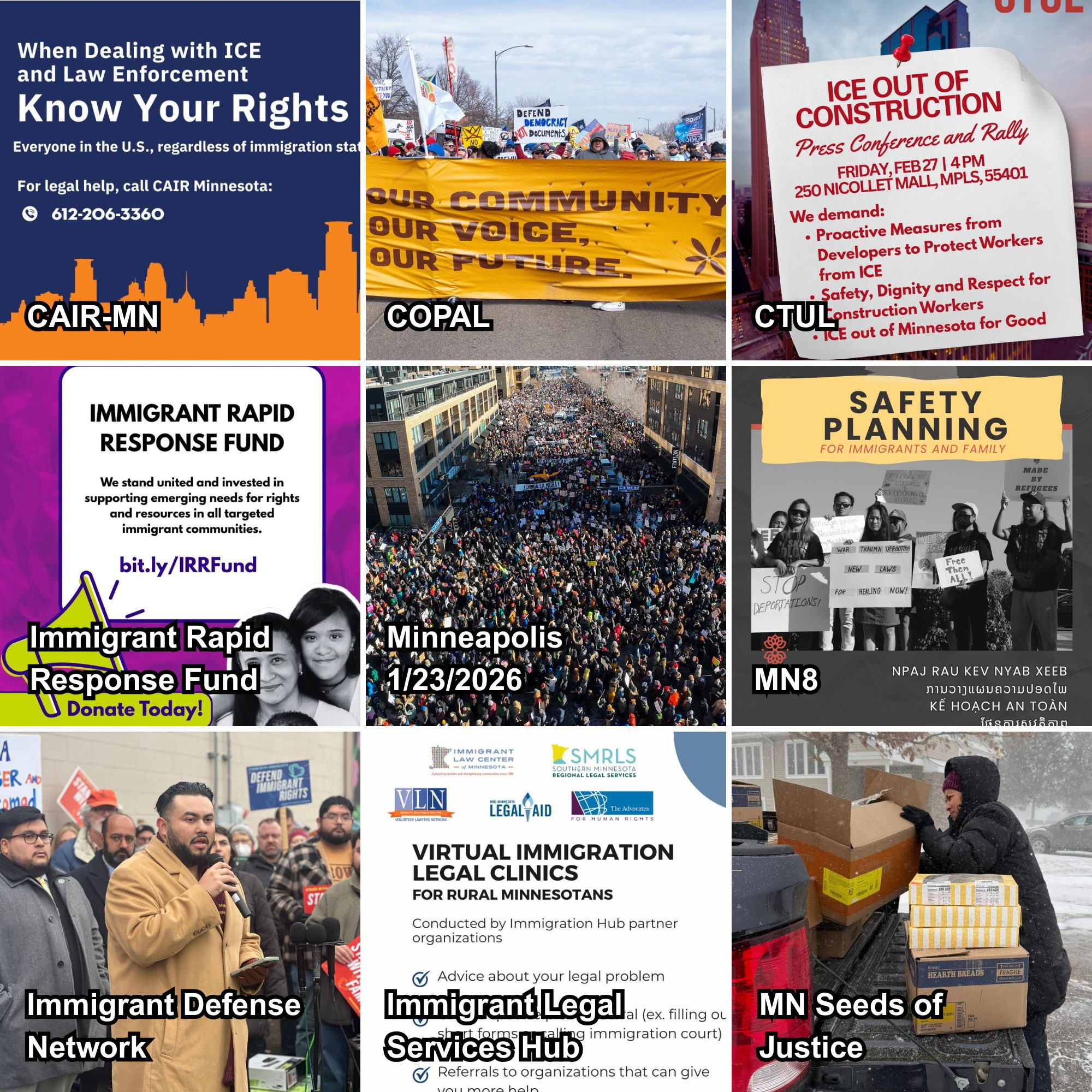
Immigrant- and refugee-led networks carried core leadership in a moment of unequal risk—and long before it, through sustained preparation. They made rapid decisions, set priorities, and guided how others could show up without causing further harm. Black organizers contributed hard-won experience, relationships, and infrastructure built through longstanding resistance to state violence, including sustained organizing and response after the murder of George Floyd. That history shaped how networks mobilized and how safety was understood and practiced. Mutual aid efforts—often informal and neighbor-to-neighbor—moved money, food, rides, and care quickly when formal systems could not.
We should resist stories that center any single organization or group, especially in a landscape that rewards visibility, branding, and simple hero narratives. It’s right to name real contributions. It’s not right to rewrite collective work as the story of one lead actor.
We can hold the reality that many people acted at once, while still keeping immigrants and refugees—and the immigrant-led leadership that shaped the response—visible and at the center.
Principle 4: Tell Everyday Stories, Not Just Institutional Ones
The headline stories tied to the violence of Operation Metro Surge matter and must not be minimized. As lessons are recorded, we should also tell the everyday stories that show how collective effort played out on the ground—people acting without titles, press strategies, or claims of ownership.
In nearly every neighborhood across the region, neighbors showed up in quiet but critical ways. One kept an extra phone charged overnight so families had a reliable way to call for help if they saw ICE activity nearby—offering both reassurance and a lifeline. In another case, a landlord delayed rent and checked in daily with tenants, not as a policy, but as a simple act of care.
This depth of action—across backgrounds, roles, and identities—made a real difference. Grassroots, neighbor‑to‑neighbor support and mutual aid are essential to any honest analysis.
Principle 5: Keep Immigrants Centered as Those Most Impacted
While people across different backgrounds played important roles, immigrants and refugees must remain centered as those most directly affected. That means naming immigrants and refugees clearly and intentionally, not speaking around them or treating their experiences as implied.
Precision about who relief is for matters. Without that clarity, targeted support spreads thin and loses impact. When emergency funds meant for immigrant-owned small businesses are described only as help for “small businesses,” or when rent relief is announced without naming immigrants and refugees as primary recipients, the people most harmed by enforcement are less likely to be adequately served.
Without this specificity, the story may sound more inclusive, but it becomes less true. Precision is not divisive. It is a form of accountability.
Closing: Treat Visibility as Responsibility
As lessons are shared, the task is not just to name what worked. It is to be clear about who it worked for, under what conditions, and at what cost. Visibility is not about recognition. It is about responsibility—making sure those most impacted, and the many people who acted alongside them, are not erased or oversimplified once the moment passes.
Staying grounded in lived impact, shared effort, and honest complexity helps ensure that what we carry forward strengthens, rather than distorts, what comes next.
Note: This post was adapted from an earlier LinkedIn post entitled Solidarity – Not Erasure by Muneer Karcher-Ramos.
Minnesotans Are Showing Up With Heart
Find out how you can help.