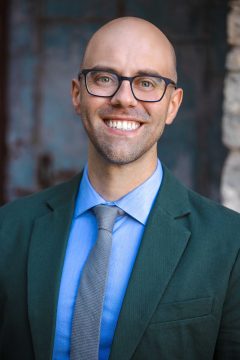
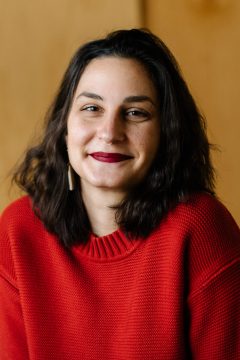
Personal essay by Sarah Spence, Midwest Regional Director, Conservative Energy Network
“Our clean energy transition is that wide view for me—a future where electricity is reliable and affordable, where families don’t fear brownouts, and where kids in places like Cincinnati don’t suffer from high asthma rates caused by coal pollution. A future that’s healthier for people and the places we call home.”
I grew up in the rolling hills and valleys of Appalachia along the Ohio River. Our small rural village was just our house, my grandparents across the road, and two other neighbors. It was there that I first understood the meaning of community and the importance of culture and identity. Though I no longer live there, it will always be the place I call home.
My grandpa taught me to love the outdoors—how to fish, how to listen to the sounds of the woods. We would go for walks together, and in the evenings, we’d pause to look up at the stars and he would point out the constellations. He had an old camper, and we’d take it out to go camping and fishing, building fires that burned late into the night. He showed me how to find beauty in the simplicity of life, to appreciate the views that we are blessed enough to see, and the hard work it often takes to get there.
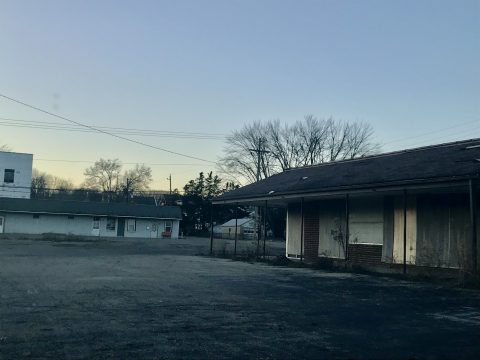
Two buildings sit empty in Sarah Spence’s hometown of Oak Hill, Ohio.
These memories have shaped who I am today and continue to inspire my work toward a clean energy future as the Midwest Regional Director for Conservative Energy Network. I didn’t recognize it then, but I had grown up witnessing true poverty. Some lived in shacks, and that was normal. We were a small community, the kind where the kids I went to preschool with were the same ones I graduated high school with. Everyone knew each other and looked out for each other. Everybody also knew your business—or made up your business. It was this strange dichotomy of rural life: the comfort of a close-knit community mixed with the lack of privacy that comes with it.
It wasn’t until I left and came back that I noticed the layers of grit that just became part of the landscape, from the logging trucks, and the coal dust. It’s a place marked by hard work and hard times, and that’s part of its character. As kids, our playground was the grounds of an abandoned coal mine—riding our bikes through the weeds in the summer and taking our sleds there in the winter. Looking back, I see how deeply the legacy of coal shaped our lives. It provided livelihoods, but it also left behind economic hardship and environmental scars. I remember being told not to drink the orange water from the creek, and to make sure the dogs didn’t drink from it either. Even as kids, we understood that something wasn’t right, even if we couldn’t explain why. Those early experiences gave me a deep empathy for communities like my own, places that were proud to have long powered our nation, yet too often have been left behind.
I vividly remember a moment that would shape me. It was my junior year of high school, just my dad and me at home, when a massive blast from the new strip mine across the road shook the entire house. Our faucet sputtered, sending red, cloudy water into the sink. The explosion had collapsed underground minerals and clay, contaminating our well—our primary source of drinking water. My mom, who was connected to the local Republican Party, started making calls to get help. For weeks, I had to go to the salon to wash my hair and we packed up our laundry to do it elsewhere. Between my parents, my dad worked for the state and my mom worked for the county. From them, I learned the importance of connection and advocacy—that sometimes, knowing who to call could make all the difference. That experience opened my eyes to public service. I realized how much it mattered to have people in positions who could speak up for their communities, especially those facing the legacy of extractive industries.
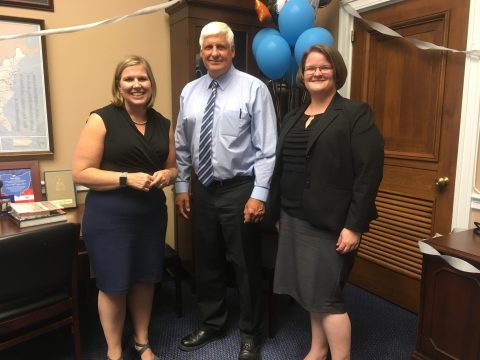
Sarah’s supervisor at Ohio Environmental Council, former Congressman Gibbs, and herself.
I was either going to go into politics or sports, but I ended up choosing public service. After college, I began working in state government, where I was introduced to a deeper understanding of policies, constituent services and the legislative process. After 14 years in state government, I transitioned to the nonprofit sector as Government Affairs Director for the Ohio Environmental Council (OEC). Around that time, new leadership recognized the need to bridge partisan divides on environmental and energy issues. Growing up in Appalachia, I knew firsthand how important it was to find common ground—because everyone wants clean air and water; we just need the right language to connect with conservatives and rural communities. My life experiences, combined with my professional ones, gave me the realization that I am the right person to help bridge that gap. That understanding sparked a deeper passion and commitment to clean energy, just transition and climate work—ultimately guiding me to my current role at the Conservative Energy Network, where I get to help build a future that supports health and vitality for everyone.
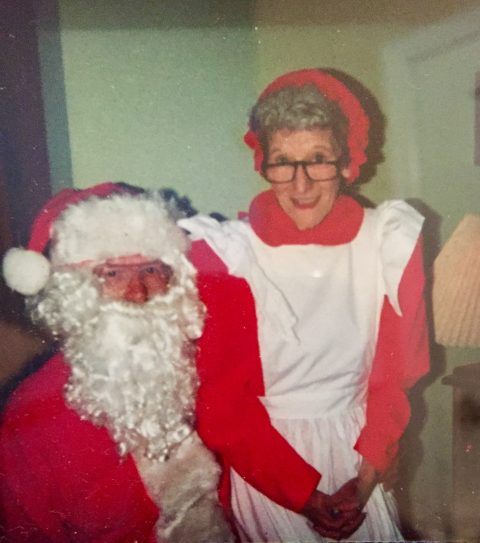
Sarah’s grandparents dressed as Santa and Mrs. Claus—grandpa was always town Santa.
When I think about what resonates with the people and places I love, I think about my grandfather—the pride he had for Appalachia. He made ham salad, an Appalachian staple at picnics and family gatherings, but his was special: Spam, government cheese, mayonnaise, pickle relish, salt, and pepper. But, no matter how many times my mom and I tried to recreate it, it never tasted the same. He’d always kick us out of the kitchen, guarding his secret recipe. My grandma did most of the cooking, but New Year’s Day was her day off, so it was a big deal when Grandpa made ham salad. That simple dish, tangy, humble, and full of heart, its flavor reminds me of home, the people I come from, the land, and the values I carry with me.
I take that same approach in my work, especially when talking about clean energy and climate. Meeting people where they are has always been at the heart of what I do. I’ve learned that meaningful conversations start with knowing who you’re talking to and understanding what they value. It highlights the importance of relationships and their longevity—something that became especially clear with policymakers I’d known from my early days in state government, who later helped open doors and created pathways to trust.
Meeting people where they are has always been at the heart of what I do. I’ve learned that meaningful conversations start with knowing who you’re talking to and understanding what they value.
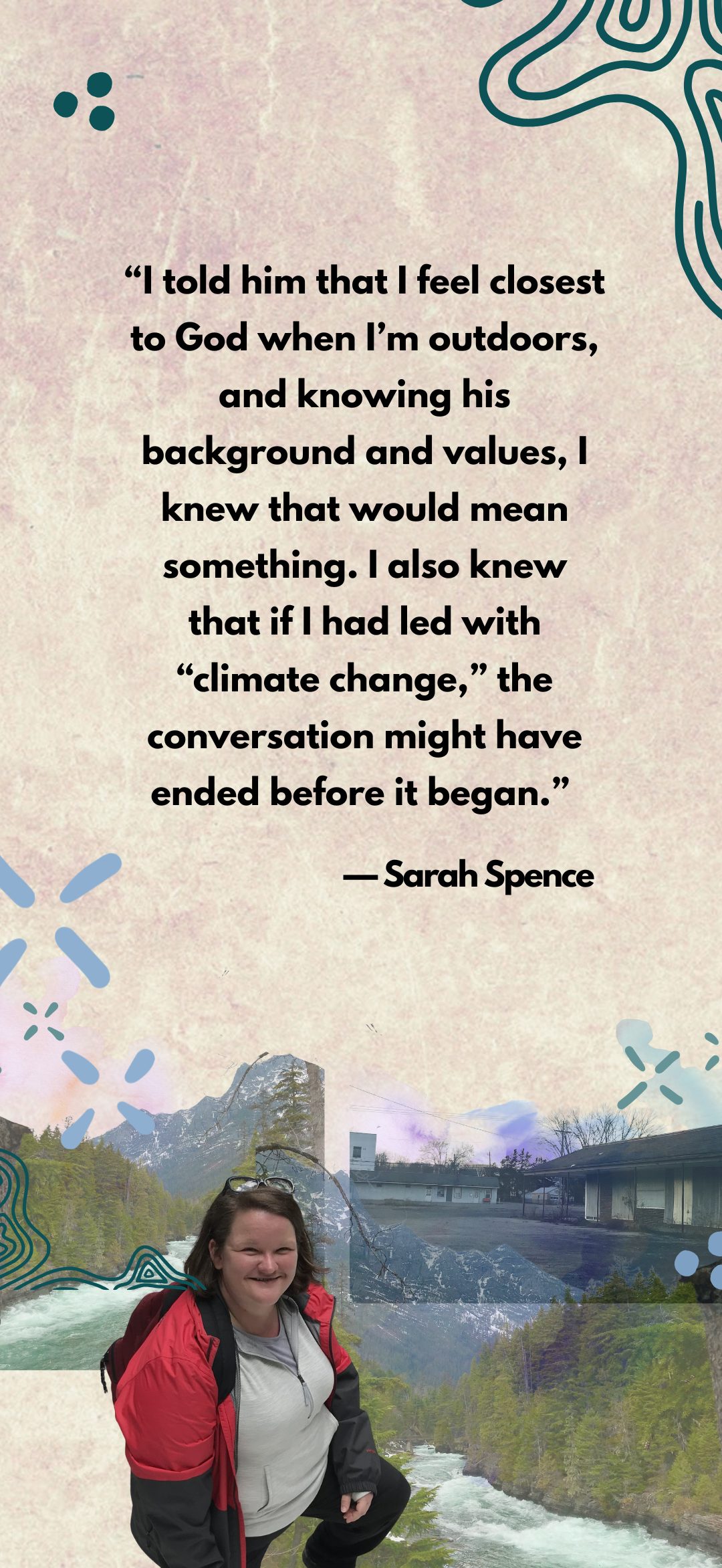
I remember being in Washington, D.C., meeting with former Congressman Gibbs alongside my OEC Executive Director. As soon as we walked in, he looked at me and said, “Didn’t I work with you in the Ohio Senate?” It was the perfect opening. He leaned back, smiled, and said, “Alright, you’ve got to tell me how this works.” That moment gave me the opportunity to talk about clean energy through a lens that resonated with him, partly as a Christian and as someone who believes in stewardship of the earth. I told him that I feel closest to God when I’m outdoors, and knowing his background and values, I knew that would mean something. I also knew that if I had led with “climate change,” the conversation might have ended before it began. In today’s world of identity politics, I try to lead first and foremost with my faith, the places and people I love, rather than politics. That perspective helps me approach conversations with openness instead of defensiveness—and helps others do the same.
My grandfather, in his love for nature, taught me to look out and cherish the wide view—to see the broader landscapes ahead. So recently, when I was in a meditation class and prompted to picture a place that brings me a sense of safety and peace, I expected my mind to drift back to Appalachia. Instead, my thoughts shifted to a different memory: Glacier National Park.
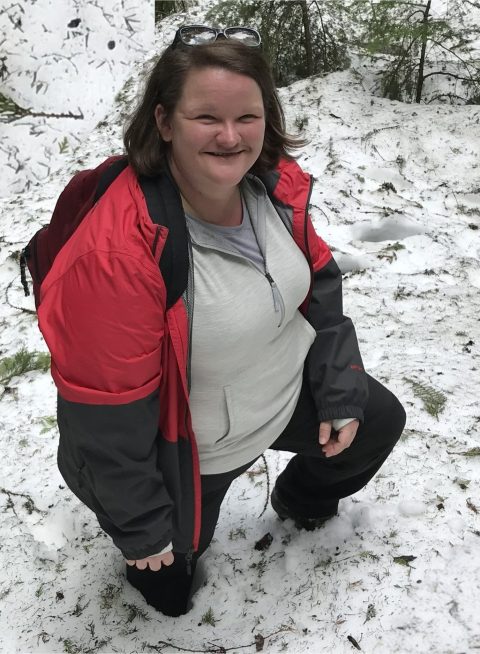
Sarah up to her knees in the snow at Glacier National Park.
In 2018, my supervisor and I attended a League of Conservation Voters conference and in our down time, we planned what we knew would be a challenging but picturesque sixteen-mile hike in the park. For weeks beforehand, I trained on treadmills and hills, thinking I was ready. It turned out to be more grueling than I had imagined. It was May, but still cold and snowy. At one point, we hit a patch of deep snow but kept going, only for my boss to suddenly scream that he had fallen waist-deep into a drift. I had to pull him out, and we faced a choice: keep going or turn back. Every step was a gamble, you were either fine or sinking to your waist. It took an hour and a half to go half a mile before we saw the road and made the decision to go off-trail to get to it, cutting our hike two miles short. We had taken turns motivating each other when the other one wanted to quit.
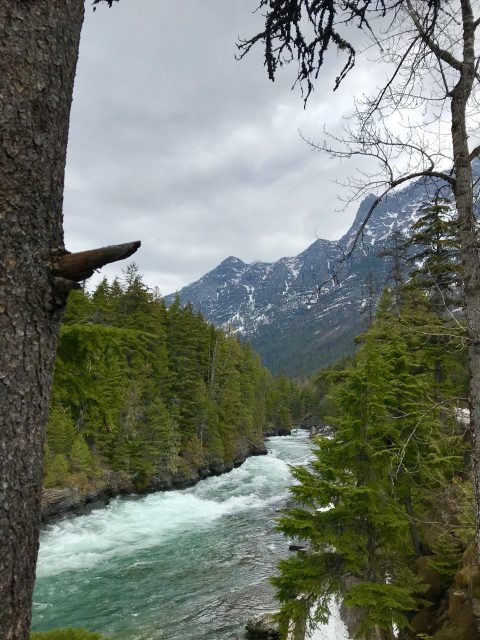
When we made it to the road, we found a small bench beside a creek with the mountains rising behind it. We sat, ate our snacks, and just breathed, the scenery around us was stunning. I remember looking at my supervisor and saying, “I’m glad I just went through that with you. I feel like I would have given up otherwise.” In that moment, I felt true rest—knowing we had pushed through something hard together. That was my wide view: the understanding that the struggle and the reward are both part of the journey.
The view from the bench in Glacier National Park.
That experience reminds me a lot of my work today. At the Conservative Energy Network, our mission is to champion secure, affordable, and reliable clean American energy—driven by free markets, innovation, national security, and property rights. I oversee eight states, helping teams ensure they have the resources they need to succeed. It’s not easy work, especially as a center-right organization in the clean energy space, but it’s meaningful. Some days, it feels like trudging through that snow, step by step, not knowing if the ground will hold. But we keep moving forward because we know the view is going to be worth it.
Our clean energy transition is that wide view for me—a future where electricity is reliable and affordable, where families don’t fear brownouts, and where kids in places like Cincinnati don’t suffer from high asthma rates caused by coal pollution. A future that’s healthier for people and the places we call home.
About the Author: Sarah Spence is the Midwest Regional Director for the Conservative Energy Network, advancing clean energy solutions across the region with over 15 years of experience in policy, government affairs, and political campaigns.