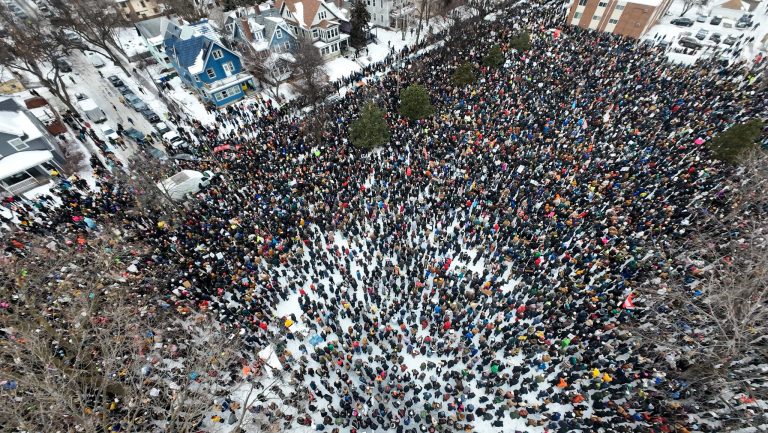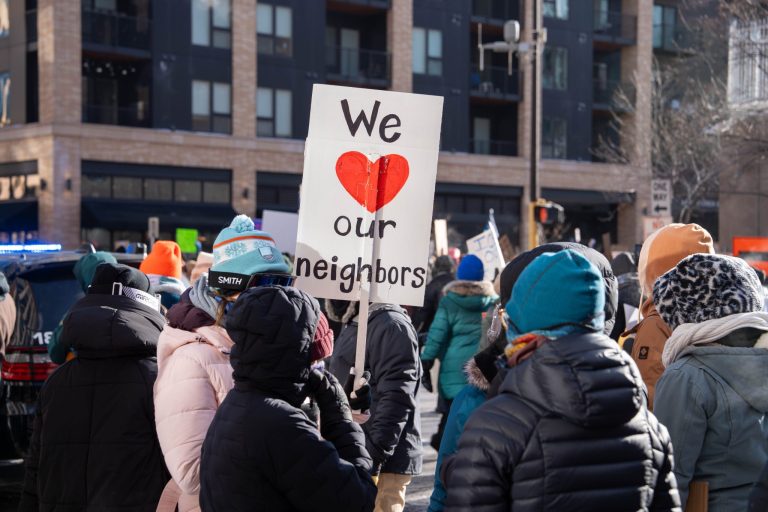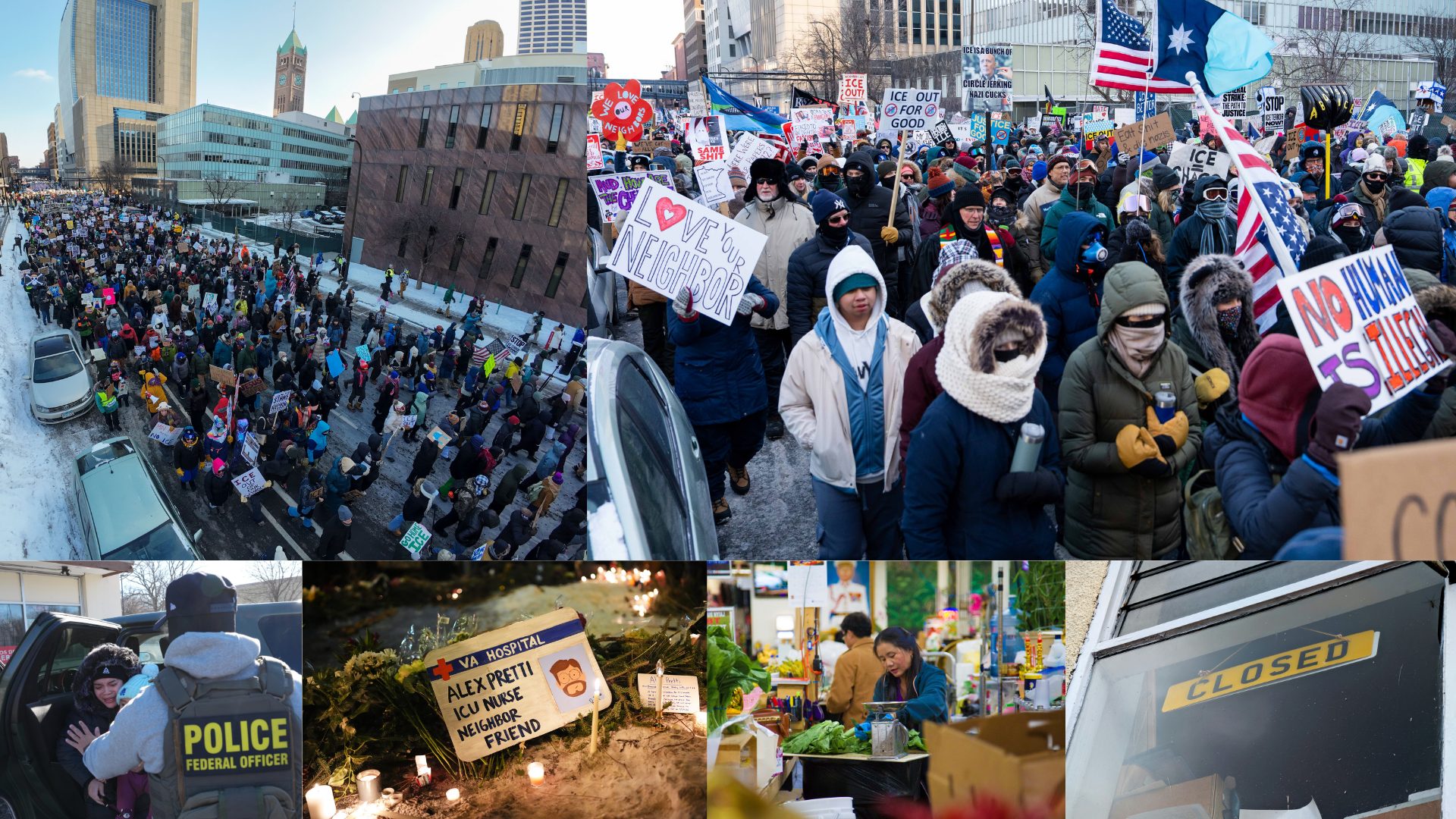
“In times of disaster and crisis, our federal government used to help lead response and recovery. Today, Minnesotans are living through the aftermath of a crisis inflicted not by nature, but by our own national leaders.”– TONYA ALLEN, PRESIDENT
Spring has finally arrived in Minnesota. We made it through one of the harshest winters in recent memory—and I am not talking about the cold.
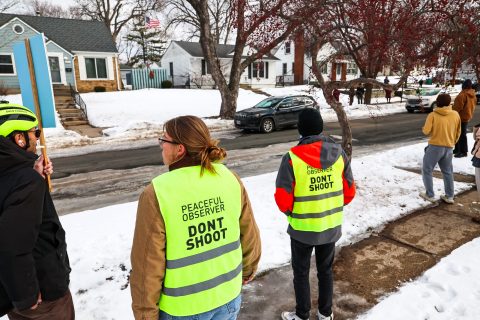
As the season changes and the headlines fade, it is tempting to believe the worst has passed. But Minnesotans know better. The strength and resolve that carried us through this winter will need to carry us further still. Because this is not over.
As one mutual aid leader expressed to me, how can it be over if our neighbors are not here?
These words have left a profound impression on me.
Indeed, when so much pain, loss, and destruction remain, it is far from over.
I have been thinking about how, in times of disaster and crisis, our federal government used to help lead response and recovery. Today, Minnesotans are living through the aftermath of a crisis inflicted not by nature, but by our own national leaders—one that touches every part of our lives and has real, material costs for government, businesses, families, and our state’s future.
Persistent student absences during the raids threaten school funding, and the learning lost during that time will have lasting consequences. Children who were forced to shelter in place, who watched violent raids unfold at their schools, who saw family members taken away—they carry trauma that does not disappear just because some agents have left.
Families are still struggling to pay rent because it was unsafe to go to work, or revenue dried up for their employers.
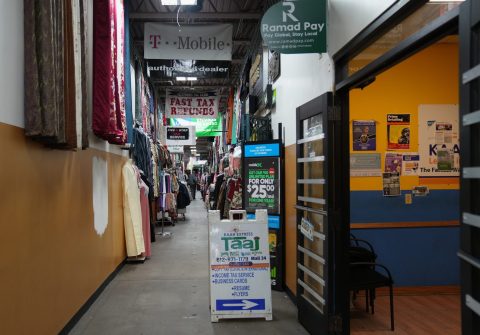 Businesses—particularly immigrant-owned establishments—closed because their staff was too afraid to come to work, customers vanished, or safety could not be guaranteed. They cannot just flip a switch and return to normal, and some will never reopen. Recent research underscores the impact on the region’s economy. According to researchers at UC San Diego, Twin Cities businesses lost an estimated $610 million in revenue and workers lost $240 million in wages as a result of the surge.
Local law enforcement has already exhausted its overtime budgets responding to the chaos of the federal government’s making. The U.S. Attorney’s office here has been gutted of experienced, patriotic prosecutors because they refused to pursue political vendettas instead of investigating real misconduct.
Other downstream impacts are yet to be quantified, but are no less real: reduced construction during an already severe housing shortage will drive up housing costs for everyone; fear-driven cancellations of medical appointments will spike health care expenses for all; and the rising need for mental health support, the absence of which comes with its own costs. All told, there could be billions of dollars in compounded economic damage to Minnesota and its local taxpayers.
Beyond the acute economic impacts of the surge here in Minnesota, the broader anti-immigrant agenda is downright bad for business: A recent in-depth analysis by CATO Institute found that since 1994, immigrants have “created a cumulative fiscal surplus of $14.5 trillion in real US dollars.” We have seen that impact here in Minnesota. Countless rural communities with aging populations and workforces have been reborn from the cultural and economic vitality of immigrants.
Like the rest of the country, Minnesota was already navigating inflation, tariffs, and economic uncertainty. “Metro Surge” made those challenges worse. On top of that, we have seen billions of federal dollars cut from programs and essential services designed to help those most in need.
“What has happened in Minnesota and elsewhere…is a full affront to American prosperity itself.”– TONYA ALLEN, PRESIDENT
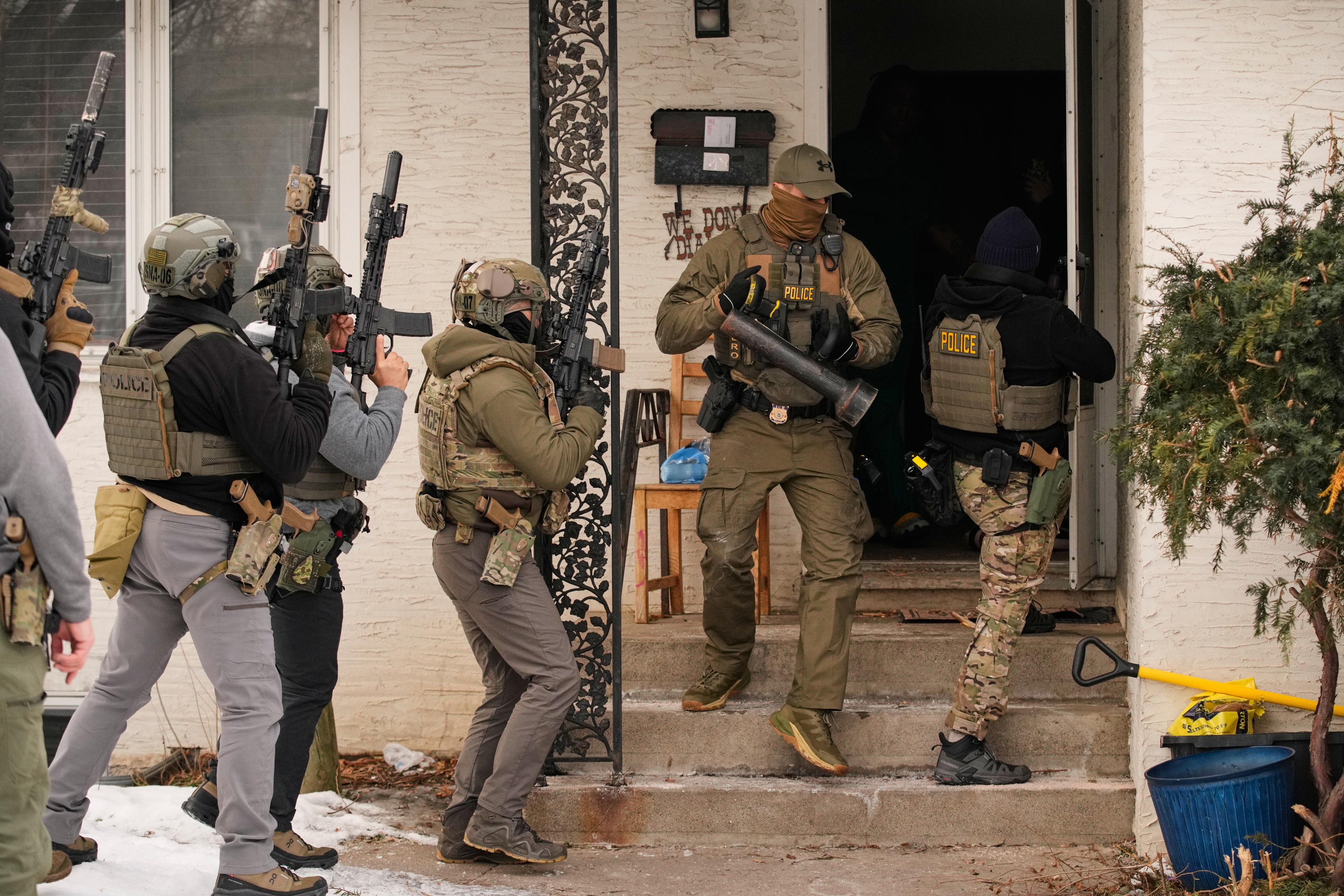
Some are reducing what has happened in Minnesota and elsewhere to an attack on “blue” cities and states. I reject that shorthand. Making this about red versus blue feeds the division this strategy depends on. And it ignores that people across all backgrounds, affiliations, and viewpoints are caught in the crossfire.
Let’s call this what it is: A full affront to American prosperity itself.
From Los Angeles to Chicago to Minneapolis, this strategy leaves behind the same trail: economic catastrophe, fractured communities, and families struggling to recover.
In the wake of hurricanes and wildfires, Americans expect their federal government to step in, to help communities rebuild, recover, and heal. But here, after flooding an American city with masked agents, wreaking incalculable damage, and killing two of our neighbors, the federal government simply walked away, pretending there was nothing left to see.
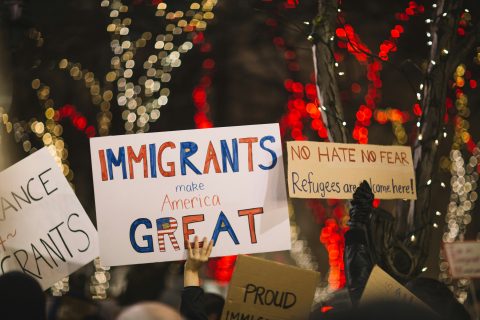 Minnesotans will do what we have always done. We will support our neighbors. We will rebuild our communities. We will find ways to move forward. And let us not forget who led in the worst of moments.
It was grassroots, immigrant-led organizations that responded first. Before any institution mobilized, community members were already organizing know-your-rights trainings, staffing hotlines, showing up as constitutional observers, delivering food, and holding space for grief. As my colleague, Muneer Karcher-Ramos, recently wrote, “Immigrant- and refugee-led networks carried core leadership in a moment of unequal risk…We can hold the reality that many people acted at once, while still keeping immigrants and refugees—and the immigrant-led leadership that shaped the response—visible and at the center.”
The question for all of us now—foundations, businesses, civic institutions, neighbors, Americans—is what are we willing to do while the federal government looks away? Recovery and healing will not happen on their own. Neither will the deeper work of building something more just and more resilient on the other side of this.
At McKnight, we have tried to answer that question with action. We recently deployed $2.6 million in immediate rent relief and longer-term rent stabilization to keep families housed amid mounting economic disruption. And our Board has approved an additional $20 million from the Foundation’s endowment—beyond our current grantmaking—to strengthen communities and defend democracy in 2026. These investments are what it looks like to take seriously the damage that has been done and the future that is still possible.
This is the test of our generation. Not just for funders, but for all of us.
I often say: the future is not finished. That can be a warning of what is to come, or an invitation to shape what comes next. We have seen what is possible when ordinary people refuse to abandon one another.
Now we must all be as brave.
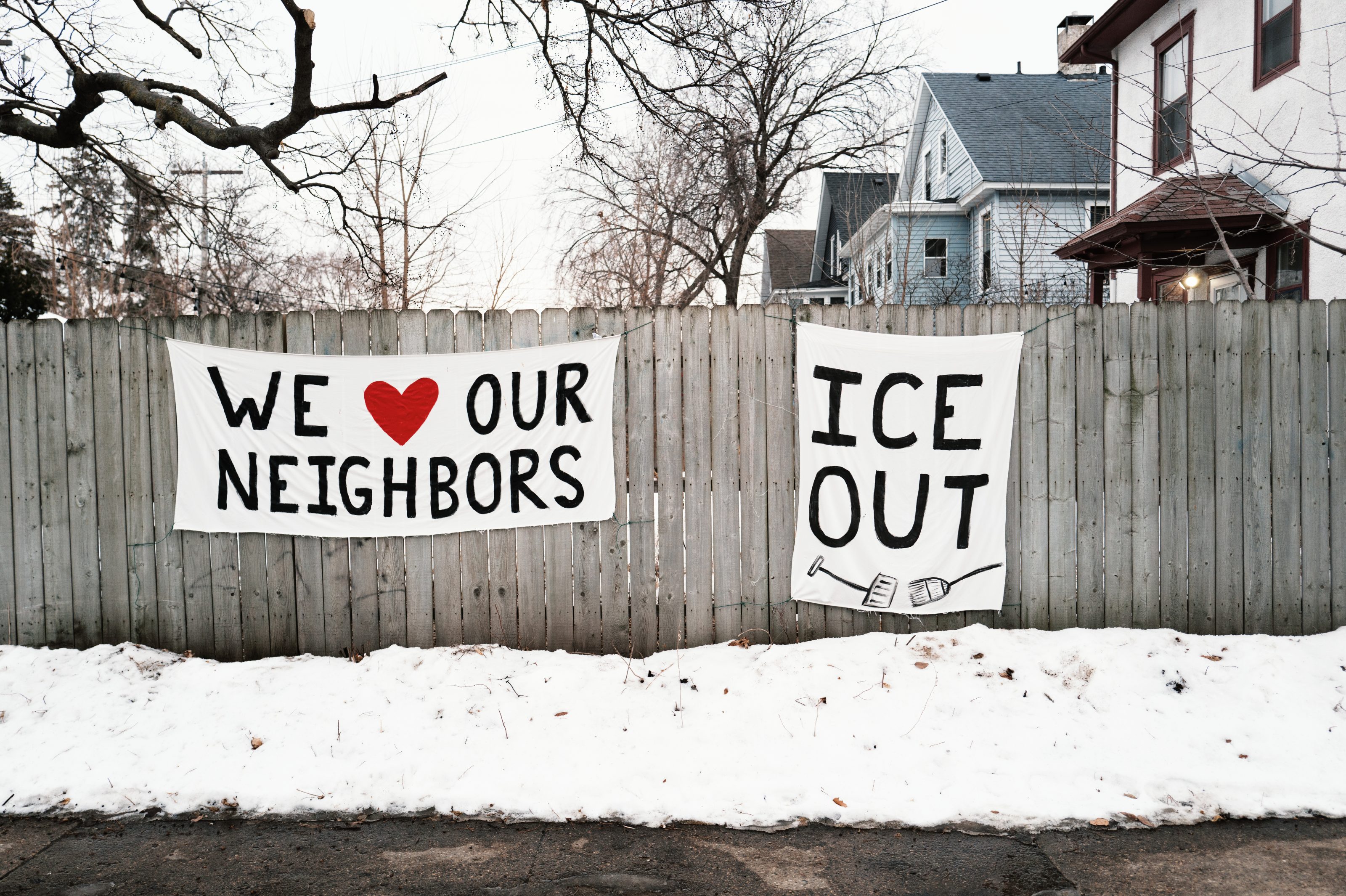
“We have seen what is possible when ordinary people refuse to abandon one another. Now we must all be as brave.”– TONYA ALLEN, PRESIDENT
Minnesotans Are Showing Up With Heart
Find out how you can help.